
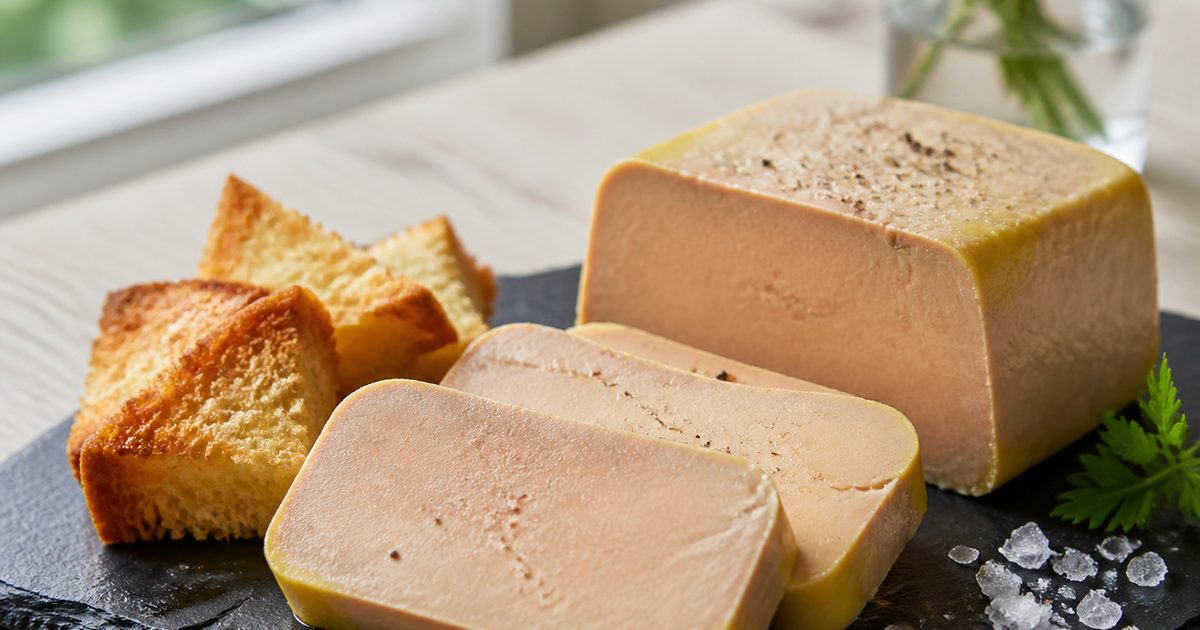
A cold slice, a hot knife, and a piece of toasted brioche on the side. That is the moment foie gras terrine makes sense. It looks formal, but the method is more careful than difficult. Once you understand the timing, the low heat, and the pressing, foie gras terrine becomes a classic French terrine you can make at home with confidence.

The goal is simple: a smooth, rich terrine that slices neatly and tastes clean, not greasy. This version keeps the seasoning restrained so the liver stays the focus. Salt, white pepper, sugar, and Sauternes give the foie gras enough structure and aroma without covering its flavor.

Prep time is about 30 to 60 minutes, not counting deveining and marinating. Cook time is usually 45 to 60 minutes. Plan on 2 to 3 days total, since the foie gras needs time to marinate and then chill completely before slicing. One 1.5-pound (680 g) terrine yields about 10 to 18 small appetizer servings.

## Why this foie gras terrine works

A good foie gras terrine depends on three things: careful deveining, gentle cooking, and enough chilling time. Skip any one of those, and the texture suffers.

Deveining matters because visible veins turn chewy once the terrine is cold. Gentle heat matters because foie gras melts fast. If it gets too hot, it renders out too much fat and turns grainy. Chilling matters because the terrine needs time to firm up so you can cut clean slices.

This style is close to a traditional duck foie gras terrine. It is served cold, often as a first course, and pairs well with brioche, crusty bread, or a little fruit on the side.

## Ingredients for foie gras terrine

- 1.5 lbs (680 g) Grade A or B duck foie gras, whole lobe
- 1.5 tsp (9 g) fine sea salt
- 0.75 tsp (2 g) freshly ground white pepper
- 0.5 tsp (2 g) granulated sugar
- 2/3 cup (160 ml) Sauternes or other sweet white wine

You will also need a terrine mold of about 1.5-quart capacity, a larger baking dish for the water bath, plastic wrap or a lid, and an instant-read thermometer.

## How to make foie gras terrine

### Bring the foie gras to room temperature

Set the foie gras out for 1 to 2 hours. It should feel cool but pliable. If you try to devein it straight from the refrigerator, it will crack and tear more than necessary.

### Devein the lobes

Separate the lobes gently with your hands. Open them just enough to find the main veins and the smaller branches. Pull the veins out slowly with your fingers or flat tweezers. Remove any visible membranes and trim away green or discolored spots.

This step takes patience. It is the part that most affects the final texture. Work slowly and do not worry if the foie gras breaks into pieces. You will pack it back together in the mold.

### Season and marinate

Place the deveined foie gras in a shallow dish. Sprinkle the salt, white pepper, and sugar evenly over the surface. Pour the Sauternes on top.

Cover tightly and refrigerate for 12 to 24 hours. Press the wrap close to the surface so the foie gras does not dry out.

### Pack the terrine

Take the marinated foie gras out of the refrigerator and let it sit for 15 to 30 minutes. Preheat the oven to 200 to 225°F (93 to 107°C).

Pack the foie gras firmly into the terrine mold. Press down as you go to remove air pockets. A compact pack gives you a tighter slice later.

### Set up the water bath

Cover the terrine with its lid. If your mold does not have one, use a double layer of plastic wrap and then foil if needed for support. Set the mold in a larger baking dish and pour in warm water until it comes about two-thirds of the way up the sides.

The water bath keeps the heat gentle and even. That is what helps preserve the silky texture people expect from foie gras terrine.

### Cook gently

Bake for 45 to 60 minutes, checking the internal temperature with an instant-read thermometer. Insert it into the center. A target of 120°F (49°C) is common for this preparation.

Do not guess here. Temperature matters more than the clock. If the foie gras climbs too high, it will release too much fat and lose that smooth, custardy texture. Some cooks use a broader range for terrine de foie gras, but 120°F is a reliable target if you want a sliceable result.

### Cool and press

Lift the terrine from the water bath and let it cool for 15 to 30 minutes. Pour off the rendered fat and reserve it.

Set a piece of foil-wrapped cardboard or a smaller dish directly on top of the foie gras. Add 1 to 2 pounds (450 to 900 g) of weight, such as cans. Refrigerate under weight for at least 12 hours.

Pressing compacts the terrine and helps it hold together when sliced.

### Seal, chill, and serve

Remove the weights. Melt the reserved fat if needed and pour it over the top to seal the surface. Cover and chill for at least another day if possible. Two to three days of chilling gives the best texture and flavor.

To serve, dip the bottom of the mold briefly in hot water and unmold if you like. Slice with a thin knife dipped in hot water, wiping the blade between cuts. Serve the foie gras terrine cold.

## Tips for smooth, clean slices

A few small habits make a big difference.

Use a hot knife. Dip the blade in hot water, wipe it dry, then slice. Repeat between cuts. That keeps the edges neat.

Do not rush the chilling time. Freshly pressed terrine is too soft to slice well. A full rest in the refrigerator helps it settle.

Pack the mold firmly. Loose packing leaves gaps, and those gaps show up in every slice.

If you are serving guests, cut the slices just before bringing them to the table. Foie gras softens quickly at room temperature.

## Variations and substitutions for foie gras terrine

This recipe is intentionally simple, but there is room to adjust the flavor.

If you want a truffled foie gras terrine, add 1 to 2 ounces (30 to 60 g) finely chopped black truffle or truffle shavings while layering the foie gras into the mold.

For a fruit note, layer in a small amount of marinated dried figs or a fruit compote. Keep it restrained so the terrine still slices cleanly.

Sauternes is classic, but other sweet wines work well too. Jurançon or Tokaji are good options. Some cooks prefer Port, Armagnac, or Cognac for a deeper aroma. Use the same quantity listed here.

Duck foie gras is more common and has a fuller flavor. Goose foie gras is milder and more delicate if you can find it.

## What to serve with foie gras terrine

Keep the plate simple. Rich food needs contrast.

Toasted brioche is the classic choice. A thin slice of crusty bread works too. Add a little fig chutney, apple chutney, or a few flakes of sea salt if you like. Pickled fruit can also work well.

For wine, Sauternes is the obvious match, especially since it is already in the terrine. If you prefer something less sweet, a crisp white with good acidity can balance the richness.

People often search for what to serve with foie gras terrine because the dish feels rich on its own. The answer is usually texture and acidity, not a long list of extras.

## Storage and food safety for foie gras terrine

Store foie gras terrine in the refrigerator at 32 to 39°F (0 to 4°C), well covered. If the top is sealed with its rendered fat, it keeps better. Use it within 1 to 3 weeks.

For longer storage, freeze it tightly wrapped for 3 to 6 months. Thaw it in the refrigerator for 24 to 48 hours. Do not refreeze after thawing.

This recipe contains alcohol from the wine.

As written, the terrine does not include common allergens such as gluten, dairy, eggs, nuts, or soy. That said, always check labels on any wine, bread, chutney, or accompaniments you serve with it.

Because foie gras terrine is cooked to a low internal temperature, safe handling matters. Keep the foie gras refrigerated before and after cooking, use clean tools and surfaces, and chill the terrine promptly after pressing. Serve it cold, and do not leave it at room temperature for extended periods.

## Foie gras terrine FAQ

### What is foie gras terrine?

Foie gras terrine is a chilled French preparation made by seasoning duck or goose liver, packing it into a mold, cooking it gently, pressing it, and serving it in slices.

### Why do you need to devein foie gras?

The veins turn firm and noticeable once the terrine is cold. Removing them gives you a smoother texture and a cleaner-looking slice.

### What temperature should foie gras terrine reach?

For this recipe, cook it to 120°F (49°C) in the center. Use an instant-read thermometer for accuracy.

### How long does foie gras terrine last in the fridge?

If you keep it cold and well covered, it lasts 1 to 3 weeks in the refrigerator. A layer of rendered fat on top helps protect it.

### Can you freeze foie gras terrine?

Yes. Wrap it tightly and freeze for 3 to 6 months. Thaw it slowly in the refrigerator before serving.
Foie Gras Terrine Recipe
8 min read