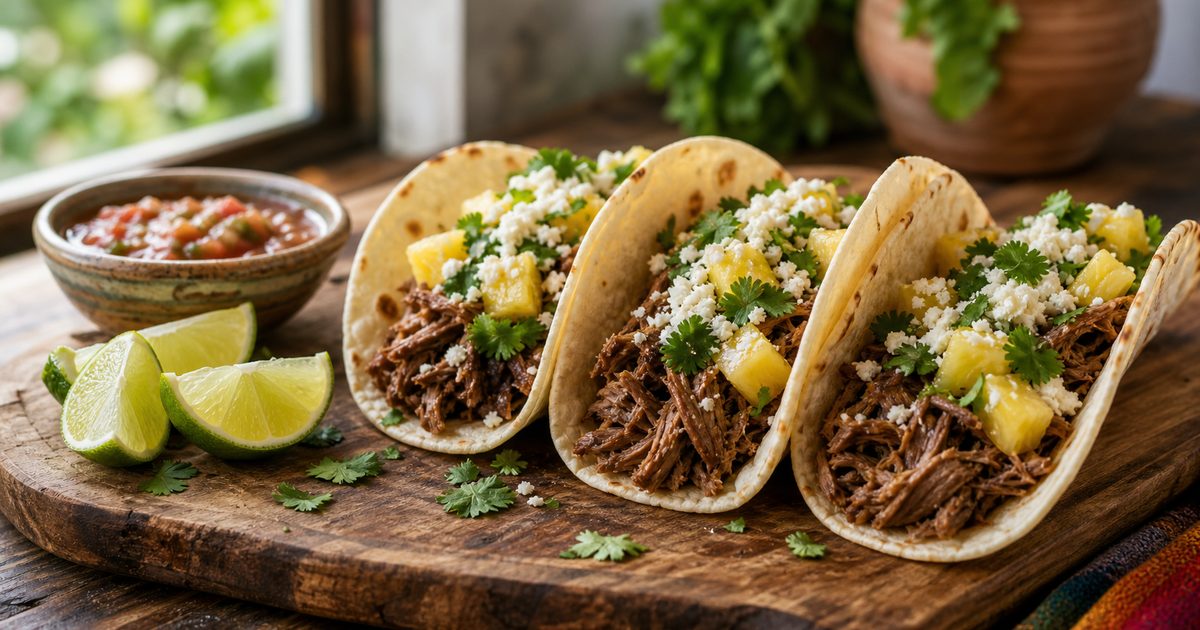
The best tacos happen when the meat is ready before you are. For pulled javelina tacos, that means giving a hind quarter time to marinate, then cooking it low and slow until it shreds in thick, juicy strands. The payoff is a platter of warm tortillas, savory meat, sweet pineapple, fresh cilantro, and enough heat from serranos or jalapeños to keep each bite lively.
This is a practical javelina recipe for a tougher cut. The meat gets salted first, then soaked in orange juice, pineapple juice, oyster sauce, and red onion. After that, it cooks in broth until it slips from the bone. Once shredded, it goes back into the pot with spices and a little fresh stock so the filling stays moist instead of stringy. If you have a hind quarter and want pulled javelina tacos that actually eat well, this method gives you a clear path.
Pulled javelina tacos quick details
- Active prep time: 15 to 20 minutes
- Marinating time: 24 to 48 hours
- Cook time: 5 to 8 hours, plus 30 to 60 minutes after shredding
- Total time: about 1 day, 6 hours to 2 days, 9 hours
- Yield: 6 to 8 servings
- Main cut: 1 javelina hind quarter, about 3 to 4 pounds / 1.4 to 1.8 kg
Ingredients for pulled javelina tacos
For the meat
- 1 javelina hind quarter, about 3 to 4 lbs / 1.4 to 1.8 kg, silver skin removed
- 1 tablespoon salt
- 2 cups / 470 ml orange juice
- 2 cups / 470 ml pineapple juice
- 4 tablespoons oyster sauce
- 1/2 red onion, sliced, for the marinade
- 6 cups / 1.4 L chicken broth or beef stock
- 1/2 red onion, sliced, for cooking
- 2 to 3 serrano chiles, sliced
- 2 teaspoons chili powder
- 2 teaspoons garlic powder
- 1 teaspoon sea salt
- 1 teaspoon cumin
- 1 teaspoon onion powder
- 1/2 teaspoon black pepper
- 16 ounces / 470 ml fresh beef stock
For serving
- 12 to 16 flour tortillas
- 1 cup / 115 g shredded Mexican cheese blend
- 1 cup / 240 ml sour cream
- 1/2 cup / 75 g chopped fresh pineapple
- 1/4 cup / 30 g chopped jalapeños or sliced serranos
- 1/2 cup / 15 g chopped cilantro
- 1 cup / 50 g shredded lettuce
- Canola oil, for frying tortillas if desired
How to make pulled javelina tacos
Salt and marinate
Rub the hind quarter all over with the tablespoon of salt.
In a large nonreactive container or pan, stir together the orange juice, pineapple juice, oyster sauce, and half of the sliced red onion. Add the meat and make sure the marinade covers it. Cover and refrigerate for 24 to 48 hours.
That long soak does two useful things. It seasons the meat early, and it helps a lean wild cut stay pleasant after a long cook.
Slow-cook the javelina
Lift the meat from the marinade and discard the marinade.
Set the hind quarter in a slow cooker or a large covered braising pot. Add the 6 cups broth or stock, the remaining red onion, and the sliced serranos. The meat should be fully submerged or nearly so.
- Slow cooker: cook on low for 5 to 8 hours
- Oven or stovetop braise: cook covered at 285 to 300°F / 140 to 150°C for 5 to 6 hours
Start checking when the meat looks loose around the bone. For pulled javelina tacos, tenderness matters more than the clock. The meat is safe to eat at 145°F / 63°C, but it will not shred well there. Keep cooking until it reaches the point where it pulls apart easily, often around 200°F / 93°C.
Shred and season
Transfer the cooked meat to a tray or large bowl. Let it cool just enough to handle, then pull the meat from the bone and shred it. Discard the bones.
Discard the cooking liquid from the pot. Return the shredded meat to the slow cooker or pot. Sprinkle in the chili powder, garlic powder, sea salt, cumin, onion powder, and black pepper. Pour in the 16 ounces fresh beef stock and stir well.
Cook on high for 30 to 60 minutes, just until the meat is hot and the seasoning has settled in. This last step makes a big difference. Instead of dry shreds sitting on top of a tortilla, you get a juicy taco filling that holds together.
Warm the tortillas and serve
Pile the warm meat into flour tortillas and add your toppings. Cheese, sour cream, pineapple, cilantro, lettuce, and extra jalapeños all work well here.
If you like a little crispness, fry the tortillas briefly in canola oil before filling them. Serve the pulled javelina tacos right away while the meat is hot and the tortillas are still soft.
Why pulled javelina tacos work so well
A hind quarter has plenty of flavor, but it needs time. Rush it and the texture stays tight. Cook it until the connective tissue softens and the meat turns tender, and the whole dish changes.
The marinade helps too. Orange and pineapple bring sweetness and acidity, while oyster sauce adds a savory note that carries through the long cook. Then the second round of seasoning, after shredding, gives the meat a more direct taco flavor.
Javelina is often compared to pork, though it is leaner and can taste a little smoky. That is why these pulled javelina tacos benefit from contrast. Pineapple brightens the filling. Sour cream cools the heat. Lettuce adds crunch. Even a simple cheese blend helps round out the sharper edges of wild game.
Tips for better pulled javelina tacos
Field handling matters as much as seasoning. If javelina is poorly dressed or not cooled quickly, the flavor can turn strong in a bad way. Clean handling, careful butchering, and quick chilling give you a much better starting point.
At the stove, the main mistake is stopping too early. If the meat fights you when you try to shred it, put it back in the pot. Tough meat does not need more force. It needs more time.
A few small choices help too:
- Slice the onion instead of chopping it fine. It is easier to strain away later.
- Use tongs and a thermometer. Guessing makes wild game harder than it needs to be.
- Taste the shredded meat before serving. If it needs more salt, add a pinch at a time.
If you are exploring more wild game cooking, the same patient approach works for javelina stew and other braised dishes. Leaner cuts, such as backstrap, are better for quick cooking and do not need this long treatment.
Allergens and food-safety notes
This recipe includes a few common allergens:
- Soy: oyster sauce
- Dairy: cheese and sour cream
- Gluten: flour tortillas may contain wheat, and some oyster sauces and broths may also contain gluten
- Possible additives: check labels on broth, stock, and cheese blend if you are cooking for allergies
For food safety:
- Marinate the meat in the refrigerator, not on the counter.
- Discard used marinade.
- Cook javelina to at least 145°F / 63°C for safety, then continue cooking until tender enough to shred.
- If you are reheating leftovers, heat them to 165°F / 74°C.
- Keep raw meat and its juices away from ready-to-eat toppings like lettuce, cilantro, and pineapple.
Substitutions and easy variations
If you do not have javelina, pork shoulder is the closest substitute for texture and cooking style. Wild pig also works well. The flavor will be different, but the method still makes sense.
You can also change the heat level. Use fewer serranos for a milder batch, or swap in jalapeños if that is what you have. For serving, corn tortillas can work if you prefer them, though the ingredient list here is built around flour tortillas.
If you like this style of filling, the same meat can be used beyond tacos. Spoon it over rice, tuck it into burritos, or use it for nachos.
How to store and reheat pulled javelina tacos
Store the cooked shredded meat in an airtight container in the refrigerator for 3 to 4 days. Keep toppings separate so they stay fresh.
For longer storage, freeze the meat in a freezer-safe container or bag for up to 3 months. Press out excess air if you use a freezer bag.
Reheat gently on the stovetop or in the microwave until the meat reaches 165°F / 74°C. Add a splash of broth if it looks dry. Warm tortillas separately, then assemble the tacos just before serving.
Pulled javelina tacos FAQ
Is javelina meat safe to eat?
Yes, if you handle it properly and cook it to a safe temperature. Good field care, refrigeration, and thorough cooking all matter.
What does javelina taste like?
Many people compare it to pork, though it is leaner and can have a slightly smoky flavor. That is one reason it works well in tacos with bright toppings.
Why can javelina taste bad?
Poor field dressing and slow cooling are common causes. If the animal is handled cleanly and chilled quickly, the flavor is usually much better.
Can I make these tacos with another meat?
Yes. Pork shoulder or wild pig are the easiest substitutes. They shred well and suit the same marinade and slow-cooking method.
What is the best way to cook javelina?
That depends on the cut. Tougher cuts do best with slow cooking, such as braising or a slow cooker. Lean cuts like backstrap are better for quick cooking.