
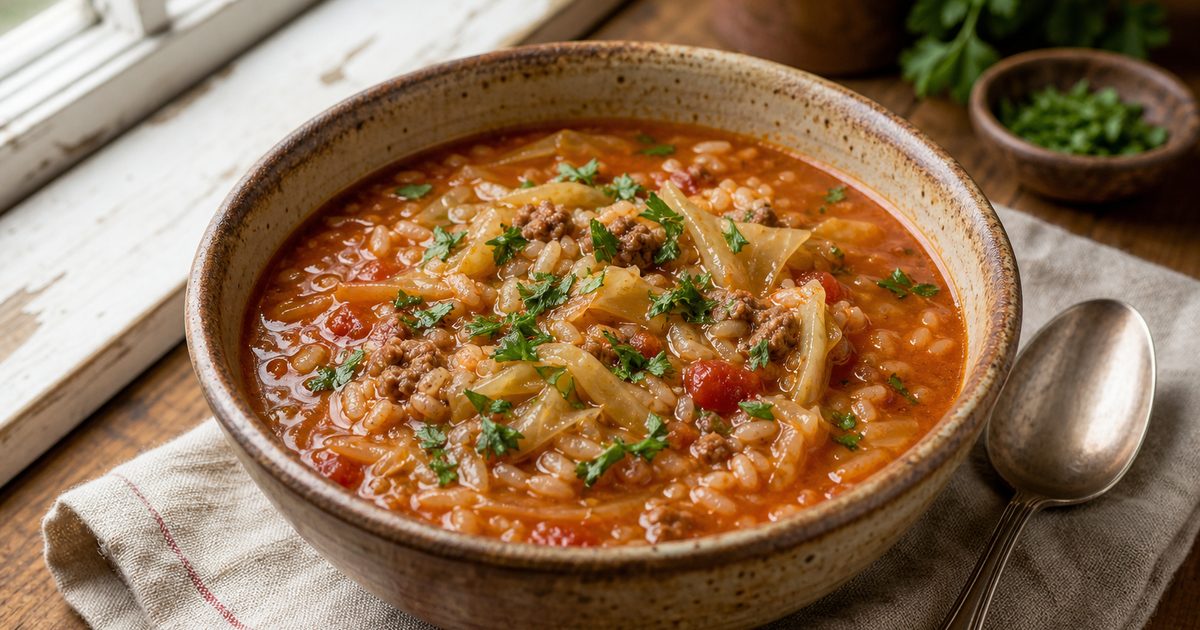
A big pot of Piggy Soup fills the kitchen with the same cozy smell as stuffed cabbage rolls, but you skip all the rolling and layering. This Piggy Soup recipe gives you tender cabbage, browned ground beef, tomato broth, and rice cooked right in the pot. If you love cabbage roll soup, this is the kind of dinner that feels hearty, simple, and worth making on a cold night.
It’s also a true one-pot meal. The ingredient list is short, the method is straightforward, and a few details make a real difference. The biggest one: cook the cabbage before you add the tomatoes. That head start helps it soften properly.
Prep time: 45 minutes
Cook time: 70 to 75 minutes
Total time: 1 hour 55 minutes to 2 hours
Yield: 6 to 8 servings
Piggy Soup ingredients
Here’s what you need for Piggy Soup:
- 1 head green cabbage, chopped into bite-sized pieces
- 1 stick (1/2 cup or 113 g) unsalted butter
- 1 medium yellow onion, diced
- 1 teaspoon kosher salt, plus more to taste
- 1 pound (450 g) ground beef
- Freshly ground black pepper, to taste
- 1/4 teaspoon cayenne pepper, optional
- 1 bay leaf
- 2 cups (470 ml) beef broth, plus extra as needed
- 1 jar (about 24 ounces or 680 g) crushed tomatoes or tomato puree
- 1 1/2 cups (355 ml) water
- 1 cup (185 g) uncooked basmati or long-grain rice
- 1 bunch fresh Italian parsley, chopped, divided
- 3 to 4 cloves garlic, minced, optional
- 3 tablespoons brown sugar, optional
A few notes before you start:
- Green cabbage holds up best here and softens nicely during the long simmer.
- Ground beef should be cooked to 160°F (71°C) for food safety.
- If your broth is salty, wait until the end before adding extra salt.
- Rice keeps soaking up liquid as the soup sits, so have extra broth or water nearby for reheating.
How to make Piggy Soup
Start by prepping the cabbage. Cut the head in half, remove the core, then slice the leaves into 1- to 1 1/2-inch strips. Cut those into bite-sized pieces and set them aside.
Set a large heavy pot or Dutch oven over medium-high heat. Melt the butter. Add the diced onion and 1 teaspoon kosher salt. Cook for 4 to 5 minutes, stirring now and then, until the onion looks soft and translucent.
Add the ground beef. Break it up with a spoon and cook for 5 to 6 minutes, until no pink remains and the meat reaches 160°F (71°C). Season with black pepper, the cayenne if using, and the bay leaf.
Pour in the beef broth and bring it to a boil. Once the broth is bubbling, add the chopped cabbage. Cook it uncovered over medium heat for 10 to 15 minutes. Stir a few times so the cabbage wilts evenly.
Now add the crushed tomatoes. Pour the 1 1/2 cups water into the empty tomato jar, swirl it around, and add that to the pot too. If you like a slightly sweeter tomato base, stir in the brown sugar here.
Lower the heat and let the soup simmer gently, uncovered, for about 50 minutes. Stir occasionally. The cabbage should keep softening, and the broth will take on a deeper flavor.
Stir in the uncooked rice and half of the chopped parsley. Simmer for about 25 minutes, or until the rice is tender. Check the pot a few times near the end. If the soup thickens more than you like, add a splash of extra broth or water.
If you want the garlic finish, melt 2 tablespoons butter in a small skillet. Add the minced garlic and cook for about 1 minute, just until fragrant. Stir it into the soup.
Taste and adjust the seasoning. Remove the bay leaf, ladle the Piggy Soup into bowls, and top with the rest of the parsley.
Why this Piggy Soup works
This Piggy Soup recipe tastes like unstuffed cabbage rolls for a reason. It uses the same core ingredients, but the method is easier and better suited to a weeknight or a lazy Sunday.
Butter matters here. It gives the broth a rounder, richer texture than oil alone. You can still make the soup with olive oil, but the finished bowl won’t have quite the same full, silky feel.
The cabbage-first step matters too. Tomatoes are acidic, and acidic ingredients can slow the softening of vegetables. If you add the cabbage after the tomatoes, it can stay firmer and a little chewy. Giving it 10 to 15 minutes in the broth first helps it turn tender.
Cooking the rice in the soup does one more useful thing. The grains absorb the beefy tomato broth as they cook, so they taste like part of the dish instead of something stirred in at the end.
Piggy Soup variations and substitutions
This pot is flexible, and a few small changes work well.
If you don’t have beef broth, use chicken broth. Water with bouillon also works. Beef broth gives the closest flavor to classic stuffed cabbage soup, but the recipe still turns out well with another broth.
If you want a brighter tomato flavor, add a small splash of apple cider vinegar, red wine vinegar, or white wine vinegar near the end. Taste first, then add a little at a time.
Worcestershire sauce can add extra savory depth. Stir in a small splash at the end if you already know you like that flavor with beef and tomatoes.
White beans can make the soup even heartier. If you use them, stir them in during the simmer so they warm through.
For the fat, olive oil can replace the butter for browning. Keep in mind that the soup will taste a little less rich. If dairy is the issue, that swap is the simplest way to make it work.
Slow cooker Piggy Soup
You can turn this into slow cooker Piggy Soup if you want dinner waiting for you.
Brown the onion and ground beef first on the stove. Cook the beef to 160°F (71°C), then transfer it to the slow cooker. Add the cabbage, broth, tomatoes, water, bay leaf, seasonings, and any optional brown sugar. Leave out the rice for now.
Cook on low for 6 to 7 hours. During the last 30 to 40 minutes, switch the cooker to high, stir in the uncooked rice, and cook until the rice is tender. Add the parsley at the end.
Because slow cookers vary, start checking the rice early. If the soup gets too thick, add a little more broth.
For another comforting slow cooker meal, try our Swamp Potatoes recipe, which pairs perfectly with a green salad.
Allergens and food-safety notes for Piggy Soup
This Piggy Soup contains dairy from the butter.
It may also contain gluten depending on the broth, bouillon, or Worcestershire sauce you use. Rice is naturally gluten-free, but packaged ingredients can vary, so check labels if you need the soup to be gluten-free.
This recipe does not contain eggs, nuts, or soy unless one of your packaged ingredients includes them.
For food safety:
- Keep raw ground beef separate from produce and ready-to-eat ingredients.
- Wash hands, knives, and cutting boards after handling raw meat.
- Cook the beef to 160°F (71°C).
- Refrigerate leftovers within 2 hours.
How to store and reheat Piggy Soup
Leftover Piggy Soup keeps well, and the flavor often gets even better by the next day.
Store cooled soup in an airtight container in the refrigerator for up to 4 days. If you want to keep it longer, freeze it for up to 3 months.
A quick note about texture: the rice will keep absorbing liquid as it sits. That means the soup will thicken in the fridge and even more in the freezer. When you reheat it, add a splash of broth or water to loosen it back up.
Reheat on the stove over medium-low heat, stirring now and then, until the soup is hot all the way through. You can also reheat individual portions in the microwave. Stir halfway through so the center heats evenly.
If you plan to freeze a batch, know that the rice may soften more after thawing. The soup will still taste good, but the texture will be a little less firm.
Piggy Soup FAQ
Why is it called Piggy Soup?
The name likely comes from Polish golabki, or stuffed cabbage rolls, which are sometimes nicknamed little piggies. This soup takes those same flavors and turns them into an easier bowl of Piggy Soup.
What does Piggy Soup taste like?
It tastes a lot like cabbage roll soup: savory beef, sweet-tender cabbage, tomato-rich broth, and rice that soaks up all that flavor. The butter gives the broth a richer finish.
Can I make Piggy Soup ahead?
Yes. It reheats well, though the rice will absorb more broth as it rests. If you make it ahead, plan to add extra broth or water when reheating.
Why add cabbage before tomatoes?
Cabbage softens better in broth before the acidic tomatoes go in. That extra step helps keep it tender instead of chewy.
Can I use a different rice in Piggy Soup?
This recipe is written for basmati or long-grain rice. Other rice can work, but cooking time and liquid needs may change, so watch the pot and adjust as needed.
For a different take on a hearty soup, consider trying our Portuguese Sopas, which also features a rich broth and tender meat.