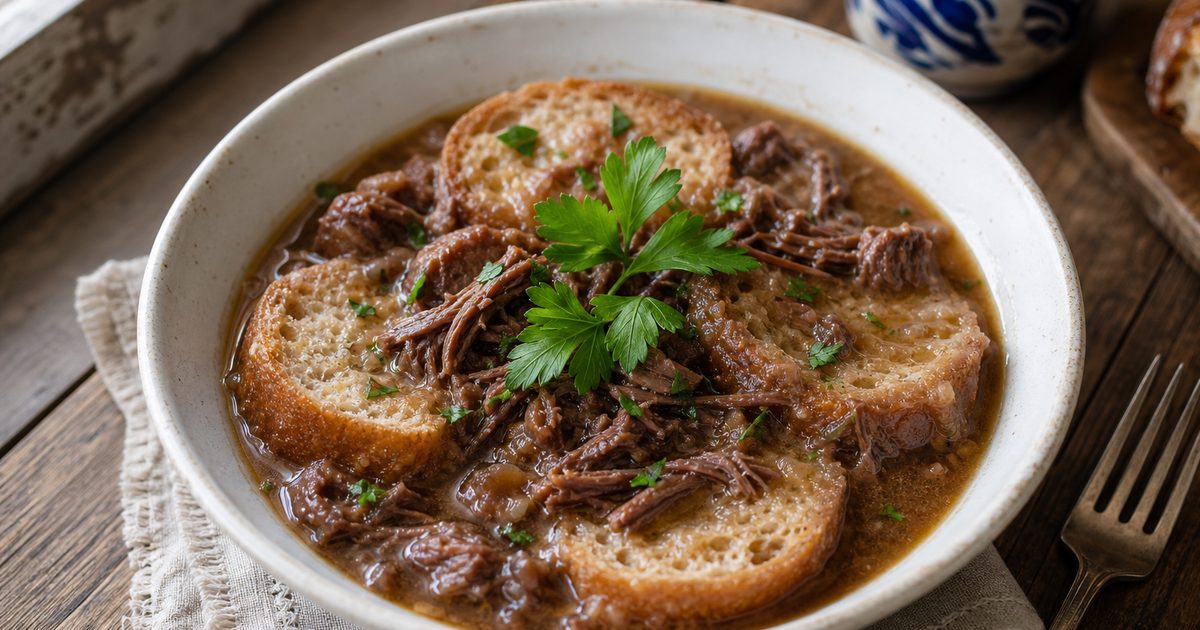
A bowl lined with day-old bread changes everything here. Once the hot broth hits, the slices soften at the edges, the center stays a little chewy, and the shredded beef settles right into it. That mix is what makes Portuguese Sopas so comforting. This old-style Portuguese Sopas recipe, sometimes called Holy Ghost Soup or sopas recipe Portuguese style, is simple to set up and deeply flavorful after a long, gentle simmer.
The dish sits somewhere between soup and braised beef. You cook a chuck roast with onion, garlic, mint, warm spices, tomatoes, and stock until the meat pulls apart easily. Then you ladle the broth and beef over bread. If you have never made Portuguese Sopas before, the method is straightforward and the ingredients are easy to find.
Prep time: 15 to 20 minutes
Cook time: 3 to 4 hours
Total time: 3 hours 15 minutes to 4 hours 20 minutes
Servings: 6 to 8
What makes Portuguese Sopas special
Portuguese Sopas is a traditional beef dish with roots in the Azores, where it is also known as Holy Ghost Soup. The name connects it to Pentecost celebrations, but you do not need a feast day to make it. It is a practical, generous meal built from a tough cut of beef, a seasoned broth, and bread that turns the whole bowl into dinner.
What stands out most is the flavor. Mint is unusual in a beef braise if you are used to standard pot roast, yet it works beautifully here. The broth tastes savory and warm, with a little sweetness from cinnamon and allspice, depth from cumin and black pepper, and brightness from tomatoes.
Ingredients for Portuguese Sopas
For 6 to 8 servings, you will need:
- 3 to 5 pounds chuck roast, bone-in or boneless
- 1 large yellow onion, diced
- 4 cloves garlic, minced
- 1 cup fresh mint leaves, whole
- 2 bay leaves
- 1 teaspoon ground allspice
- 1 teaspoon ground cinnamon
- 1 teaspoon ground cumin
- 1 teaspoon black pepper
- 1 teaspoon kosher salt, or to taste
- 1 can (14.5 ounces / about 411 g) diced tomatoes, undrained
- 4 cups low-sodium beef stock
- Water, as needed, to just cover the meat
- 1 head cabbage, quartered, optional
- 1 loaf day-old French, Italian, or Portuguese bread, sliced
Why these ingredients work in Portuguese Sopas
Chuck roast is the right choice because it softens during a long simmer. Leaner cuts tend to dry out or stay firm. Chuck has enough connective tissue to turn tender and rich once it cooks low and slow.
The seasoning is what gives Portuguese Sopas its character. Cinnamon and allspice add warmth, not sweetness. Cumin brings earthiness. Black pepper gives the broth a little edge. Mint keeps the pot from tasting heavy.
Tomatoes and stock form the base of the broth. The tomatoes add body and a mild acidity that balances the beef. The stock gives you a fuller, deeper cooking liquid than water alone.
Then there is the bread. Slightly stale bread holds its shape better in the bowl, which is why day-old slices are ideal for this Portuguese bread soup style of serving.
How to make Portuguese Sopas
1. Season the beef
Pat the chuck roast dry if needed. Sprinkle it with salt.
In a small bowl, mix the allspice, cinnamon, cumin, and black pepper. Rub that mixture over the beef so the surface is evenly coated.
2. Build the pot
Add the diced onion and minced garlic to a large heavy pot or Dutch oven. Set the seasoned roast on top.
Add the mint leaves, bay leaves, diced tomatoes with their juices, and beef stock. Pour in enough water to just cover the meat if the liquid level is still low.
3. Simmer until fork tender
Bring the pot to a boil over medium-high heat. As soon as it boils, lower the heat to a gentle simmer and cover the pot.
Cook for 3 to 4 hours. Check the roast near the 3-hour mark. It is ready when a fork slides in easily and the meat pulls apart without resistance. If it still feels tight or slices neatly instead of shredding, keep cooking.
If you want to add cabbage, put the quartered pieces into the pot during the last 30 minutes.
4. Serve over bread
Place sliced day-old bread in shallow bowls.
Lift the beef out and shred or pull it into large pieces. Spoon the meat and hot broth over the bread. Add cabbage if you used it. Serve right away while the bread is soaking up the liquid.
The cooking detail that matters most
The biggest difference between decent and excellent Portuguese Sopas is time. You are not just cooking the roast until it is safe to eat. You are cooking it until the tough connective tissue breaks down.
For food safety, whole cuts of beef should reach at least 145°F (63°C) with a rest time. In this dish, the roast usually goes much higher, often into the 190 to 205°F range (88 to 96°C), which is what gives you that soft, shreddable texture. Use a thermometer if you like, but the fork test is just as important. The meat should come apart easily.
Keep raw beef separate from bread and other ready-to-eat ingredients while you prep. Wash hands, knives, and cutting boards after handling the meat.
Common mistakes when making Portuguese Sopas
Stopping too early is the main one. A roast can be fully cooked and still not be tender enough for this dish. If it fights the fork, it needs more time.
Another issue is using fresh, soft sandwich bread. It tends to dissolve too quickly. A sturdier loaf works much better.
Too much salt can also creep in if you use regular stock. Low-sodium beef stock gives you more control, especially since the broth reduces a little as it cooks.
Variations and substitutions
A few small changes work well without losing the spirit of the dish.
- If you do not have Portuguese bread, use French or Italian bread.
- If you want greens, cabbage is the classic optional addition here, but hearty greens such as collards can stand in.
- If you prefer a lighter bowl, serve the beef and broth without bread. It will not have the traditional finish, but it still makes a satisfying meal.
- You can use water instead of beef stock if needed. The broth will taste lighter and less rich.
The original ingredient list does not include wine, celery, or parsley, so they are best left out unless you already know you want to change the flavor.
Serving ideas for Portuguese Sopas
Serve Portuguese Sopas hot, with plenty of broth in each bowl. The bread should be soaked but not completely dissolved. Some people like larger chunks of beef, while others prefer it more finely shredded. Either works.
If you are serving a crowd, bring the bread to the table separately and let everyone build their own bowl. That keeps the texture better, especially if some people want more broth than others.
Storage and reheating
Store leftover beef and broth in an airtight container in the refrigerator for up to 4 days. If possible, store the bread separately so it does not turn mushy.
Reheat on the stovetop over medium-low heat until the broth is hot and the beef is heated through. You can also microwave individual portions in a covered microwave-safe bowl, stirring once or twice for even heating.
Freeze the beef and broth, without the bread, for up to 3 months. Thaw overnight in the refrigerator before reheating. Reheat leftovers to 165°F (74°C).
Allergen notes for Portuguese Sopas
This dish contains beef.
If you serve it with French, Italian, or Portuguese bread, it also contains gluten. Check the bread label if you need to avoid wheat. The recipe does not include dairy, eggs, soy, or nuts as written, but packaged stock and bread can vary, so labels are worth checking if allergies are a concern.
FAQ about Portuguese Sopas
What is Portuguese Sopas?
It is a slow-cooked beef and broth dish, often served over slices of day-old bread. In many homes, it is closer to a broth-soaked braise than a thin soup.
Why is Portuguese Sopas called Holy Ghost Soup?
The name comes from its connection to Pentecost celebrations in the Azores. You may also see it referred to as Portuguese Holy Ghost Soup.
What cut of beef is best for Portuguese Sopas?
Chuck roast is the usual choice. Bone-in or boneless both work, as long as you give the meat enough time to become fork tender.
Can I make Portuguese Sopas without cabbage?
Yes. Cabbage is optional in this version. The dish still works well with just the beef, broth, and bread.
How do I know when Portuguese Sopas is done?
The roast should shred easily with a fork. If it still feels firm or slices cleanly, simmer it longer.