
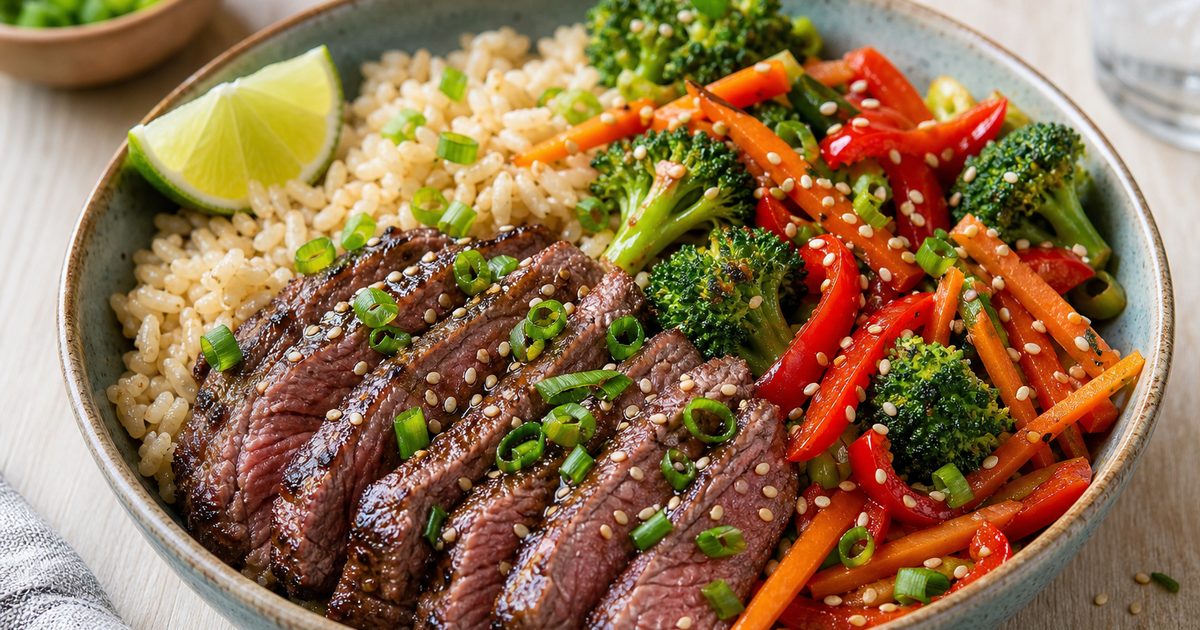
A hot skillet, a bowl of fluffy grains, and steak sliced thin against the grain. That is the appeal of this Yard House Steak Bowl recipe. It gives you tender beef, crisp-tender vegetables, and a savory sauce that coats the rice and quinoa without making the bowl soggy.
This copycat bowl is practical too. The ingredients are easy to find, the steps are straightforward, and the whole meal lands on the table in about 35 to 50 minutes. It makes 4 servings, which is enough for dinner with leftovers if you keep the components separate.
Ingredients for Yard House Steak Bowl recipe
- 1 lb (450 g) sirloin or flank steak
- 1 tbsp (15 ml) olive oil, plus more for cooking
- 1 tsp salt
- 1/2 tsp black pepper
- 1 cup (185 g) brown rice, uncooked
- 1/2 cup (90 g) quinoa, uncooked
- 4 baby bok choy, chopped
- 1 cup (115 g) snap peas, trimmed
- 1 large carrot, thinly sliced
- 8 oz (225 g) shiitake mushrooms, sliced
- 1/2 medium red onion, sliced
- 1 bell pepper, sliced
- 3 cloves garlic, minced
- 1 tsp fresh ginger, minced
- 1 1/2 cups (360 ml) low-sodium chicken stock
- 1/4 cup (60 ml) soy sauce or tamari
- 2 tbsp (30 ml) oyster sauce
- 2 tbsp (25 g) brown sugar
- 2 tsp (10 ml) sesame oil
- 2 tbsp (30 ml) Shaoxing rice wine, optional
- Sesame seeds, for garnish
- Green onions, chopped, for garnish
Allergen note: This dish contains soy and shellfish if you use oyster sauce. It may also contain sesame. If you use tamari, check the label if you need a gluten-free option. Standard soy sauce usually contains wheat.
How to make Yard House Steak Bowl recipe
-
Cook the grains.
Cook the brown rice and quinoa according to their package directions, either together if the timing works for your brands or in separate pots if it does not. Fluff with a fork and keep warm. -
Mix the sauce.
In a bowl, whisk together the chicken stock, soy sauce or tamari, oyster sauce, brown sugar, sesame oil, garlic, ginger, and Shaoxing rice wine if using. Stir until the sugar dissolves. -
Season the steak.
Pat the steak dry with paper towels. Rub it with 1 tablespoon olive oil, then season both sides with the salt and black pepper. -
Cook the steak.
Heat a large skillet or wok over medium-high heat. If the pan looks dry, add a small drizzle of oil. Cook the steak for 3 to 5 minutes per side, depending on thickness and how done you like it. -
Rest and slice.
Move the steak to a cutting board and let it rest for 5 to 10 minutes. Slice it thinly against the grain. -
Stir-fry the vegetables.
Add a little more oil to the skillet if needed. Add the bok choy, snap peas, carrot, shiitake mushrooms, red onion, and bell pepper. Stir-fry for 3 to 5 minutes. The vegetables should soften slightly but still keep some bite. -
Warm the grains.
Add the cooked rice and quinoa to the pan. Pour in 2 to 3 tablespoons of the sauce and toss for 1 to 2 minutes, just until the grains are hot and lightly coated. -
Finish the bowl.
Return the sliced steak to the skillet. Pour in the remaining sauce and toss gently to warm everything through. -
Serve.
Divide into bowls and top with sesame seeds and green onions.
Yard House Steak Bowl recipe tips that make a difference
The steak matters, but the timing matters more. A quick rest after cooking keeps the juices in the meat. If you slice right away, the cutting board gets the moisture instead of the bowl.
High heat helps the vegetables too. You want the mushrooms cooked, the bok choy wilted, and the snap peas and peppers still a little crisp. That mix of textures is what makes a steak rice bowl feel satisfying instead of flat.
Slicing against the grain is especially important if you use flank steak. Look for the long muscle lines and cut across them, not parallel to them. That shortens the fibers and gives you more tender bites.
If you like to cook by temperature, use an instant-read thermometer:
– Medium-rare: 130°F to 135°F (54°C to 57°C), then rest
– Medium: 140°F to 145°F (60°C to 63°C), then rest
For food safety, whole cuts of beef should reach at least 145°F (63°C) with a 3-minute rest if you want the USDA minimum guideline. Use separate plates and utensils for raw and cooked steak, and wash hands and surfaces after handling raw meat.
Why this Yard House Steak Bowl recipe works
This bowl has a clear structure, and each part has a job.
Brown rice brings chew and a nutty flavor. Quinoa lightens the texture a little, so the base does not feel too dense. Together, they hold up well under the sauce.
The sauce is simple but balanced. Soy sauce adds salt and depth. Oyster sauce gives it that savory restaurant-style finish people look for in a copycat Yard House steak bowl. Brown sugar softens the sharper edges, while sesame oil adds aroma right at the end.
Then come the vegetables. Shiitake mushrooms add earthiness. Bok choy turns silky in the pan. Snap peas, carrots, onion, and bell pepper bring sweetness and crunch. When you combine all of that with sliced beef, you get a bowl that feels complete.
Best steak and easy swaps for Yard House Steak Bowl recipe
Sirloin and flank steak are the easiest choices here. Sirloin is tender and easy to cook. Flank has strong beefy flavor and works well if you slice it thin.
A few swaps work nicely if you need them:
- Tamari for soy sauce: good if you avoid wheat
- All brown rice or all quinoa: use what you already have cooked
- Jasmine rice: softer and less nutty, but still good in this bowl
- Broccoli or asparagus: useful if you do not have bok choy or snap peas
- Tofu or tempeh: a practical meat-free option
If you want a spicy version, add sriracha, chili oil, or red pepper flakes to the sauce or drizzle some on top. If you are after a steak and quinoa bowl with more heat, that is the easiest way to get there without changing the rest of the recipe.
For a shellfish-free version, leave out the oyster sauce and use more soy sauce to taste. The flavor will change, but the bowl will still work.
Serving ideas for Yard House Steak Bowl recipe
This bowl is filling on its own, so it does not need much on the side. A wedge of lime can brighten it up. Extra green onions add freshness. A sprinkle of sesame seeds gives a little crunch.
If you are packing lunches, this Asian steak bowl also works well for meal prep. Keep the sauce light when you first cook it, then add a spoonful while reheating if the grains need moisture.
Storage and reheating
Leftovers keep best when you store the steak, vegetables, and grains separately in airtight containers in the refrigerator for up to 3 days. That keeps the vegetables from going too soft and helps the steak stay tender.
Reheat the grains and vegetables in a skillet over medium heat with a small splash of water, stock, or extra sauce. Add the steak at the end and warm it gently for a minute or two. If you heat the beef too long, it can turn tough.
You can freeze the cooked grains on their own for longer storage. The vegetables and steak are better fresh or refrigerated for short-term leftovers.
FAQ about Yard House Steak Bowl recipe
Can I use leftover steak in this Yard House Steak Bowl recipe?
Yes. Slice it thinly and add it at the end, just long enough to warm through. A little extra sauce helps keep it from drying out.
What kind of steak is best for a Yard House Steak Bowl recipe?
Sirloin and flank steak are the best choices from this ingredient list. Flank has great flavor, while sirloin tends to be a little more tender.
Can I make this Yard House Steak Bowl recipe spicy?
Yes. Stir sriracha, chili oil, or red pepper flakes into the sauce, or spoon them over the finished bowl.
Can I use frozen vegetables?
Yes, but fresh vegetables give the best texture. If you use frozen vegetables, thaw and drain them first so they do not water down the stir-fry.
Can I make this bowl gluten-free?
You can get close by using tamari instead of soy sauce and checking every label carefully, especially the oyster sauce and stock. Use certified gluten-free products if needed.