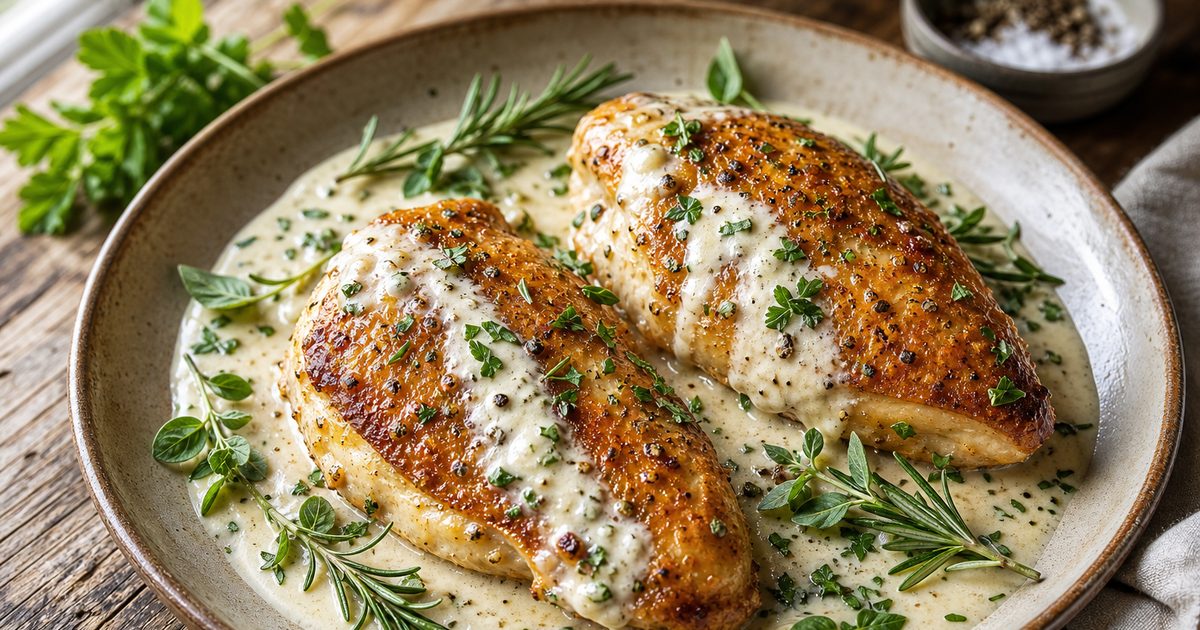
Crispy skin is the reason to make Jidori chicken breast this way. The skin browns fast, the meat stays juicy, and the pan turns into a quick sauce with white wine, stock, and soft goat cheese. It feels dinner-party worthy, but the method is straightforward enough for a weeknight if you have 30 minutes.
This recipe keeps the focus on the bird. Fresh garlic and herbs go under the skin, not over the top, so they flavor the meat as it cooks. Then the chicken sears skin-side down until golden, and the same skillet becomes the sauce pan. If you have been looking for a reliable Jidori chicken breast recipe, this one is simple and practical.
Prep time: 10 minutes
Cook time: 20 minutes
Total time: 30 minutes
Servings: 2
Ingredients for Jidori chicken breast
For 2 servings, you will need:
- 2 Jidori chicken breasts, split, skin-on
- 3 cloves garlic, minced
- 1/2 cup fresh parsley, chopped
- 2 tablespoons oregano
- 3 tablespoons rosemary, chopped
- 1 small fresh goat cheese, about 4 ounces (113 g), crumbled
- 1 cup white wine (240 ml)
- 1 cup chicken stock (240 ml)
- 2 teaspoons extra virgin olive oil (10 ml)
- 1 teaspoon butter (5 g)
- Salt, to taste
- Black pepper, to taste
Allergen note: This dish contains dairy from the goat cheese and butter. Chicken stock may contain celery depending on the brand.
Why this Jidori chicken breast method works
The best part of this Jidori chicken breast recipe is where the herbs go. Sliding the garlic, parsley, oregano, and rosemary under the skin puts the flavor right against the meat. The herbs stay protected from the direct heat, so they do not scorch in the pan.
The second key step is drying the skin well before cooking. Moisture is the enemy of crispness. If the skin is damp, it steams. If it is dry, it sears and turns golden.
Jidori chicken is especially good for this because the meat has a firmer texture and the skin renders nicely in a skillet. If you have ever wondered how to cook Jidori chicken breast so it actually tastes special, this is the kind of method that makes the most of it.
How to make Jidori chicken breast
-
In a medium bowl, mix the garlic, parsley, oregano, and rosemary.
-
Gently loosen the skin on each Jidori chicken breast with your fingers. Tuck the herb mixture between the skin and the meat.
-
Pat the skin dry with paper towels. Season both breasts with salt and black pepper.
-
Heat the olive oil and butter in a large skillet over medium-high heat.
-
Place the chicken in the pan skin-side down. Press lightly for a few seconds so the skin makes full contact with the pan.
-
Sear until the skin is golden brown and crisp. The exact time will depend on the size of the breasts and your pan, so watch the color closely.
-
Flip the chicken and cook the second side briefly.
-
Pour the white wine and chicken stock into the pan. Let the liquid bubble for about 2 minutes to pick up the browned bits.
-
Lower the heat to medium-low.
-
Transfer the chicken to a warm plate for a moment.
-
Add the crumbled goat cheese to the pan. Stir until it melts into the wine sauce and thickens slightly.
-
Return the chicken to the skillet. Cover and cook for 2 to 3 minutes, or until the thickest part reaches 165°F (74°C).
-
Serve the Jidori chicken breast hot with the goat cheese sauce spooned over the top.
Tips for the best Jidori chicken breast
A few small choices make a big difference here.
Dry the skin thoroughly. This matters more than adding extra oil. Good contact with the pan gives you that crisp finish people want from pan-seared chicken.
Do not pack too much herb mixture under the skin in one lump. Spread it out as evenly as you can. That helps the chicken cook more evenly and keeps the skin flat against the pan.
Use a thermometer if you can. Chicken breast goes from juicy to dry quickly. Pull the meat once the center reaches 165°F (74°C). Clear juices can be a clue, but temperature is more reliable.
Watch the sauce at the end. Goat cheese melts quickly, but it can look a little rough if the heat is too high. Keep the pan at medium-low and stir gently.
If your skillet runs hot, lower the heat after the first minute of searing. You want browned skin, not burnt herbs or a dark pan sauce.
Substitutions and variations for Jidori chicken breast
This Jidori chicken breast recipe is flexible in a few useful ways.
If you do not have all the herbs listed, thyme or sage work well under the skin. The flavor changes, but the method stays the same.
If goat cheese is not your favorite, cream cheese or mascarpone can replace it. The sauce will be milder and less tangy.
If you want to skip the wine, use more chicken broth in its place. That gives you an alcohol-free version without changing the basic cooking method.
You can also make this with regular skin-on chicken breast. It will still be good. The texture and flavor will be a little different, and the skin may not crisp in quite the same way, but the recipe still works.
What to serve with Jidori chicken breast
The sauce is rich, so the best sides are the ones that can catch it.
Roasted potatoes are an easy choice. Wild rice works well too, especially if you want something hearty. Couscous or short pasta can turn this into more of a comfort-food dinner. If you want a lighter plate, add a simple green salad with a sharp vinaigrette.
A spoonful of sauce over mashed potatoes is also hard to beat.
For a sweet ending, consider serving a Southern pineapple yum yum cake for dessert.
Storage and reheating
Store leftover Jidori chicken breast and sauce in separate airtight containers in the refrigerator for 3 to 4 days. Keeping them separate helps the skin stay as good as possible.
Reheat the chicken gently in a skillet over low heat or in a low oven until hot. Warm the sauce separately and stir it as it heats. If the sauce thickens too much in the fridge, loosen it with a small splash of stock.
You can freeze it, but the texture may change. The chicken can dry a little after thawing, and the goat cheese sauce may separate. If you do freeze it, thaw overnight in the refrigerator before reheating.
Food safety for Jidori chicken breast
Keep raw chicken away from ready-to-eat foods, and wash your hands, knife, and cutting board after handling it.
Cook Jidori chicken breast to an internal temperature of 165°F (74°C) in the thickest part. That is the safest and most accurate way to check doneness. Do not rely on color alone.
If you are using wine in the sauce, let it simmer briefly after adding it to the pan. That helps the flavors come together before the cheese goes in.
FAQ about Jidori chicken breast
What is Jidori chicken?
Jidori refers to a premium style of chicken associated with Japanese breeding and raising standards. In cooking, people usually choose it for its fuller flavor, firmer texture, and skin that crisps well.
Can I use regular chicken breast instead of Jidori chicken breast?
Yes. Skin-on chicken breast is the closest substitute. The recipe still works, though the flavor and texture will not be exactly the same.
How do I get crispy skin on Jidori chicken breast?
Pat the skin very dry, start with a hot pan, and cook skin-side down first. Do not move the chicken too early. Let the skin brown before flipping.
What does goat cheese do in the sauce?
It melts into the wine and stock to make a creamy pan sauce with a tangy finish. It is softer and sharper than a cream-based sauce, which works well with rich chicken skin.
What sides go best with Jidori chicken breast?
Roasted potatoes, wild rice, couscous, short pasta, or a crisp salad all pair well. Anything that can catch the sauce is a good choice.