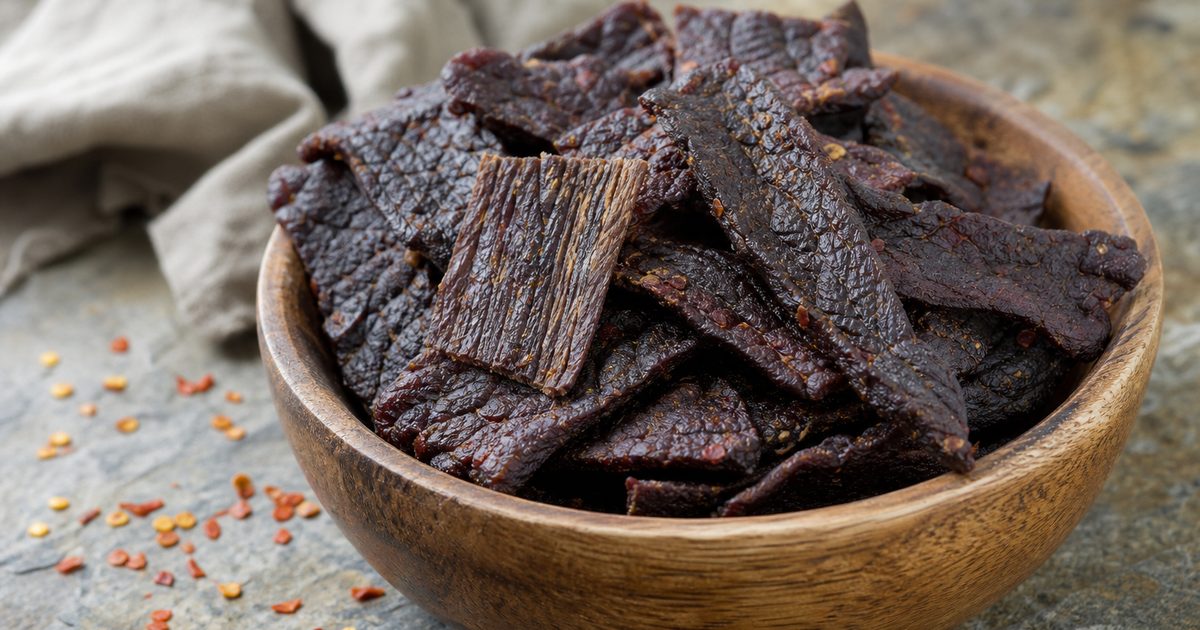
A strip of jerky should flex in your hand, not crack like a twig. That texture is the sweet spot, and it’s one reason low sodium beef jerky is so satisfying to make at home. You get to control the salt, the slice thickness, and the final chew. The result is a snack that tastes savory and beefy instead of harshly salty.
This low sodium beef jerky recipe keeps the ingredient list simple and the method practical. Use a dehydrator if you have one, or make low sodium beef jerky in oven style with a wire rack and a low temperature. Either way, the goal stays the same: dry, flexible strips with good flavor and no sticky spots.
Prep time is 30 to 45 minutes, plus 8 to 24 hours for marinating. Drying takes 4 to 8 hours. A batch made from 1 1/2 to 2 pounds (680 to 907 g) of raw beef yields about 8 ounces (227 g) of finished jerky, depending on how dry you take it.
Ingredients for low sodium beef jerky
- 1 1/2 to 2 pounds lean beef, such as eye of round, top round, flank steak, or sirloin tip
- 1/2 cup low-sodium soy sauce or liquid aminos
- 2 to 3 tablespoons reduced-sodium Worcestershire sauce
- 1 tablespoon apple cider vinegar or balsamic vinegar
- 2 teaspoons garlic powder
- 2 teaspoons onion powder
- 1 tablespoon coarsely ground black pepper
- 1 tablespoon brown sugar or honey, optional
- 1 teaspoon liquid smoke, optional
- 1 teaspoon smoked paprika, optional
- 1/2 to 1 teaspoon red pepper flakes or cayenne pepper, optional
Serves: About 8 one-ounce servings
Allergen note: Soy is present if you use soy sauce or many liquid aminos. Worcestershire sauce may contain soy depending on the brand. Check labels if needed.
How to make low sodium beef jerky
Start by trimming the beef well. Remove all visible fat. This matters for more than appearance. Fat does not dry properly, and it shortens shelf life.
Set the beef in the freezer for 30 to 60 minutes, until firm but not frozen solid. That short chill makes clean slicing much easier.
Slice the meat into strips 1/8 to 1/4 inch thick. Cut across the grain if you want a more tender bite. Cut with the grain if you like jerky with a chewier pull. Try to keep the strips even so they dry at the same pace.
In a large bowl or a resealable bag, mix the low-sodium soy sauce, Worcestershire, vinegar, garlic powder, onion powder, and black pepper. Add the brown sugar or honey if you want a touch of sweetness. Add liquid smoke, smoked paprika, or red pepper flakes if you want a smoky or spicy batch.
Add the sliced beef and coat every piece well. Cover or seal, then refrigerate for 8 to 24 hours. Overnight is easy and gives the meat time to pick up flavor.
Take the beef out of the marinade and discard the used marinade. Pat the strips dry with paper towels. This step helps the meat dry instead of steam.
Dehydrator method for low sodium beef jerky
Arrange the strips in a single layer on dehydrator trays. Leave space between pieces so air can move around them.
Set the dehydrator to 160 to 165°F (71 to 74°C). Dry for 4 to 8 hours. Start checking at the 4-hour mark, then keep checking every hour or so. The exact time depends on strip thickness, humidity, and your machine.
Oven method for low sodium beef jerky
Line a baking sheet with foil or a silicone mat and set a wire rack on top. Arrange the beef strips in a single layer on the rack.
Preheat the oven to 160 to 175°F (71 to 79°C). If your oven does not go that low, use the lowest setting. Prop the oven door open slightly with a wooden spoon so moisture can escape. Dry the jerky for 4 to 8 hours, flipping the strips every 1 to 2 hours.
This is the easiest way to make homemade low sodium beef jerky without special equipment.
Food safety for low sodium beef jerky
Raw beef needs careful handling. Wash your hands, knife, cutting board, and counters before and after working with the meat. Keep the beef refrigerated while marinating. Never reuse the marinade after raw meat has been in it.
For safety, the jerky should reach an internal temperature of 160°F (71°C). If your drying setup runs lower than that, place the dried strips on a baking sheet and heat them in a 275°F (135°C) oven for 10 minutes after drying. Check a thicker piece with an instant-read thermometer if you want to be certain.
Let the jerky cool completely to room temperature before storing it.
What makes low sodium beef jerky work
A few small choices make a big difference here.
First, use lean beef. Eye of round and top round are classic choices because they dry well and have little surface fat. Flank steak and sirloin tip also work if they are trimmed carefully.
Second, slice evenly. Thick and thin pieces in the same batch lead to trouble. The thin ones turn brittle while the thick ones stay damp in the center.
Third, don’t skip the drying test. Proper low sodium beef jerky should feel firm and leathery. It should bend and show small cracks, but it should not snap in half. If you see moisture when you bend a piece, keep drying.
The marinade matters too. Reduced-sodium soy sauce gives savory depth. Worcestershire adds a little tang and complexity. Vinegar brightens the flavor. Garlic, onion, and black pepper fill it out so the jerky still tastes full even with less salt. If you’ve searched for beef jerky marinade low sodium, this is the kind of simple formula that works well without getting fussy.
Tips, swaps, and flavor ideas for low sodium beef jerky
If you like heat, add more red pepper flakes or cayenne. A little goes a long way in dried meat, so start modestly.
For a sweeter, smoky batch, use the brown sugar or honey and add the liquid smoke or smoked paprika. That gives the jerky a campfire edge.
If you want a teriyaki-style version, keep the soy sauce, add the honey or brown sugar, and mix in a little ground ginger if you already use it in your kitchen. It’s a nice direction for healthy low sodium beef jerky because the flavor still feels bold.
Need a soy-free option? Use coconut aminos if that works for your diet. The flavor will be a little sweeter and less sharp than soy sauce.
If you leave out the sugar or honey, the jerky will be less sweet and may dry a bit firmer. That is not a problem, just a texture difference.
Common mistakes when making low sodium beef jerky
The biggest mistake is leaving too much fat on the meat. Even small fatty edges can turn unpleasant during storage.
Another common issue is slicing unevenly. A brief freeze and a sharp knife fix most of that problem.
Too much surface moisture can slow drying. After marinating, blot the strips well. Wet strips take longer and can stay tacky.
Underdrying is another problem. If the jerky still feels soft, sticky, or wet in spots, it is not done. Give it more time.
Overmarinating can also push the flavor too far. Stay in the 8 to 24 hour range. That is enough time for the seasoning to soak in without making the meat overly salty or tough.
How to store low sodium beef jerky
Cool the jerky completely before packing it away. If you store it while still warm, trapped condensation can soften the strips and shorten shelf life.
Keep it in an airtight container or zip-top bag in a cool, dry place for up to 7 days. For longer storage, refrigerate it for 14 to 21 days.
You can also freeze it for 3 to 6 months in a freezer bag or vacuum-sealed package. Thaw before eating. Reheating is usually not needed, though cold jerky straight from the fridge softens a little if you let it sit at room temperature for a few minutes.
If you notice mold, an off smell, or greasy spots that seem rancid, discard it.
FAQ about low sodium beef jerky
How do I know when low sodium beef jerky is done?
It should look dry and feel leathery. Bend a piece. It should flex and crack slightly, but not break cleanly. You should not see wet spots inside.
What cut of beef is best for low sodium beef jerky?
Eye of round, top round, flank steak, and sirloin tip are all good choices. Pick a lean cut and trim all visible fat before slicing.
Can I make low sodium beef jerky without a dehydrator?
Yes. The oven method works well. Use a wire rack, set the oven to 160 to 175°F, and prop the door open slightly so moisture can escape.
Is low sodium beef jerky healthier than store-bought jerky?
Homemade jerky gives you more control over the salt level and ingredients. That can make it a better fit for some diets, but the exact nutrition depends on the brands and amounts you use.
Can I use ground beef for low sodium beef jerky?
This recipe is written for whole muscle beef, which gives the classic jerky texture. Ground beef jerky is a different method and needs careful handling and a separate formula.