Golden edges and a tender middle are the whole point here. Roasted tromboncino squash turns sweet, lightly nutty, and a little savory in the oven, and it does not need much help to get there. Olive oil, salt, pepper, and enough room on the pan do most of the work.
If you have never cooked this long Italian squash before, this is a good place to start. Roasted tromboncino squash is simple, flexible, and easy to fit next to roast chicken, grilled meat, beans, or a grain bowl. It also works whether your squash is young and slender or more mature and firm, closer in character to a winter squash.
Roasted tromboncino squash at a glance
Prep time: 10 to 15 minutes
Cook time: 45 to 60 minutes
Total time: 55 to 75 minutes
Servings: 4 to 6
For roasting, choose tromboncino squash that feels firm and looks free of soft spots or major blemishes. The skin is thin and edible, especially on younger squash, so you do not need to peel it.
The flavor lands somewhere near butternut squash, though often milder. High heat brings out that sweetness and gives roasted tromboncino squash the browned edges that make each bite taste fuller and more concentrated.
Ingredients for roasted tromboncino squash
For 4 to 6 servings, you will need:
- 1 to 2 medium tromboncino squash, about 2 to 3 pounds (900 to 1350 g)
- 2 to 3 tablespoons olive oil (30 to 45 ml)
- 1/2 to 1 teaspoon salt, to taste
- 1/4 to 1/2 teaspoon black pepper, to taste
- 2 to 3 cloves garlic, minced, optional
- 1 tablespoon lemon juice (15 ml), optional
- 1/2 medium onion, sliced, optional
Optional flavor additions:
– Fresh rosemary or thyme
– A pinch of red pepper flakes
– Parmesan cheese for serving
If you add Parmesan, the dish contains dairy.
How to cut tromboncino squash for roasting
There are two easy ways to prep it, and each gives you a slightly different result.
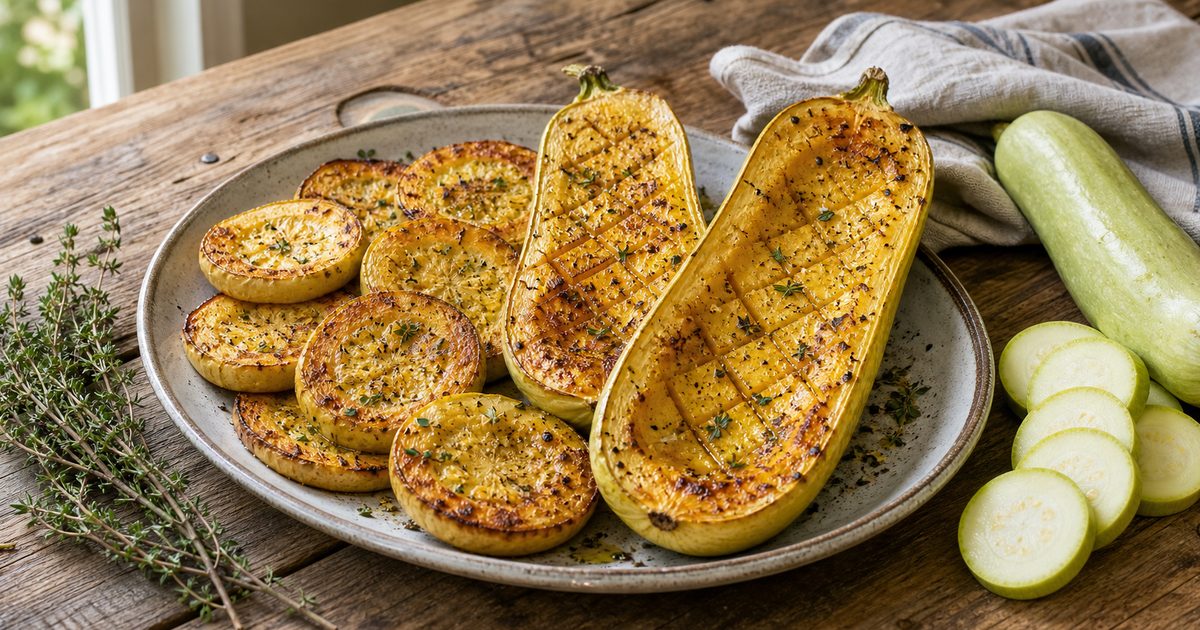
Cut into rounds
Slice the squash into 1/2-inch (1.25 cm) rounds. This gives you lots of cut surface, which means more browning. If you want plenty of caramelized edges and easy serving, this is the best option.
Halve and score
Cut the squash lengthwise, then lightly cross-hatch the flesh with a knife. Do not cut through the skin. This style looks nice on the table and makes it easy to scoop or slice after roasting.
If your squash has a bulbous seed cavity at one end, you can treat it like other squash. Slice the long neck into rounds, then halve the seeded end and score it.
How to make roasted tromboncino squash
-
Preheat the oven to 400 to 425°F (200 to 220°C).
-
Wash the squash well and dry it. If you see any tough stem end, trim it off.
-
Cut the squash into 1/2-inch (1.25 cm) slices, or halve it lengthwise and score the flesh.
-
In a large bowl, combine the olive oil, salt, black pepper, and any optional garlic or lemon juice.
-
Add the squash and toss until coated. If you are using sliced onion, add it now and toss again.
-
Arrange the squash in a single layer on a large baking sheet. Leave space between pieces. Use a second sheet if needed.
-
Roast for 45 to 60 minutes, turning sliced pieces halfway through, until the squash is fork-tender and browned around the edges.
-
Taste and add more salt or a squeeze of lemon juice if you like. Finish with herbs, red pepper flakes, or Parmesan before serving.
Why roasted tromboncino squash sometimes turns watery
One crowded sheet pan can undo the whole recipe. When the pieces sit too close together, they release moisture and steam each other. You still get soft squash, but you lose the color and the deeper roasted flavor.
For the best roasted tromboncino squash, spread the pieces out. A little space matters more than an extra spoonful of oil. High heat helps too, but spacing is what keeps the surface dry enough to brown.
If your oven runs cool, roast at the higher end of the range. If the squash is getting tender but still pale, give it a few more minutes rather than pulling it early.
Flavor ideas for roasted tromboncino squash
The basic version is good as is, but a few small changes can take it in different directions.
Garlic adds a savory note that fits naturally with squash. Lemon juice brightens the finished dish and keeps it from tasting flat. Rosemary or thyme bring a woodsy flavor that works especially well if you are serving this with roast pork or chicken.
A pinch of red pepper flakes adds contrast without making the dish hot. Parmesan gives roasted tromboncino squash a salty finish and a little richness.
If you want to keep the edges from burning, add delicate herbs near the end of roasting or after the pan comes out of the oven.
Substitutions for roasted tromboncino squash
If you cannot find tromboncino, this same method works with butternut squash and many other summer or winter squash varieties. The flavor and texture will shift a little, but the roasting approach stays useful.
Young tromboncino behaves more like summer squash and may cook a bit faster. A mature squash can act more like butternut and may need the longer end of the roasting time.
That flexibility is part of what makes roasted tromboncino squash worth learning. Once you know what fork-tender and caramelized looks like, you can apply the same method to what you have on hand.
Serving ideas for roasted tromboncino squash
This side dish fits into a lot of meals without much planning.
Serve it with roast chicken, grilled sausages, pork chops, or baked fish. Add it to a grain bowl with farro or rice. Tuck leftovers into a salad with greens and a sharp vinaigrette. You can also spoon it over ricotta toast if you want a simple lunch.
If you roast the squash in halved pieces, it makes a nice platter dish. If you roast it in rounds, it is easier to scatter into bowls or pass at the table.
Storage and reheating
Let leftover squash cool, then store it in an airtight container in the refrigerator for 3 to 4 days.
Reheat in a 350°F (175°C) oven until warmed through, or use the microwave for a quicker option. The oven brings back some of the roasted texture. The microwave softens it more.
You can freeze cooked squash, but the texture usually gets softer after thawing. Frozen leftovers are better folded into soup or mashed into a puree than served as a side dish.
Allergen and food-safety notes
This recipe is usually free of common allergens such as eggs, soy, nuts, and gluten.
If you add Parmesan, it contains dairy.
There is no meat or egg in the base recipe, so there are no special internal temperature concerns here. As with any cooked vegetable dish, refrigerate leftovers within 2 hours. Reheat leftovers until hot all the way through before serving.
Roasted tromboncino squash FAQ
What does tromboncino squash taste like?
It has a mild, slightly nutty flavor. Many people compare it to butternut squash, especially when roasted, though younger squash can taste lighter and more delicate.
Do you peel tromboncino squash before roasting?
No. The skin is thin and edible, especially on young squash. Just wash it well and trim the ends if needed.
Is tromboncino a summer squash or a winter squash?
It can be used as either, depending on maturity. Young tromboncino cooks more like summer squash. A mature one behaves more like winter squash.
Why did my roasted tromboncino squash not brown?
The most common cause is overcrowding. If the pieces are packed tightly, they steam instead of roast. Spread them out in a single layer and use a second pan if needed.
Can I roast tromboncino squash with onions?
Yes. Sliced onion works well here and is already built into the optional ingredients. It softens and sweetens as the squash roasts.