
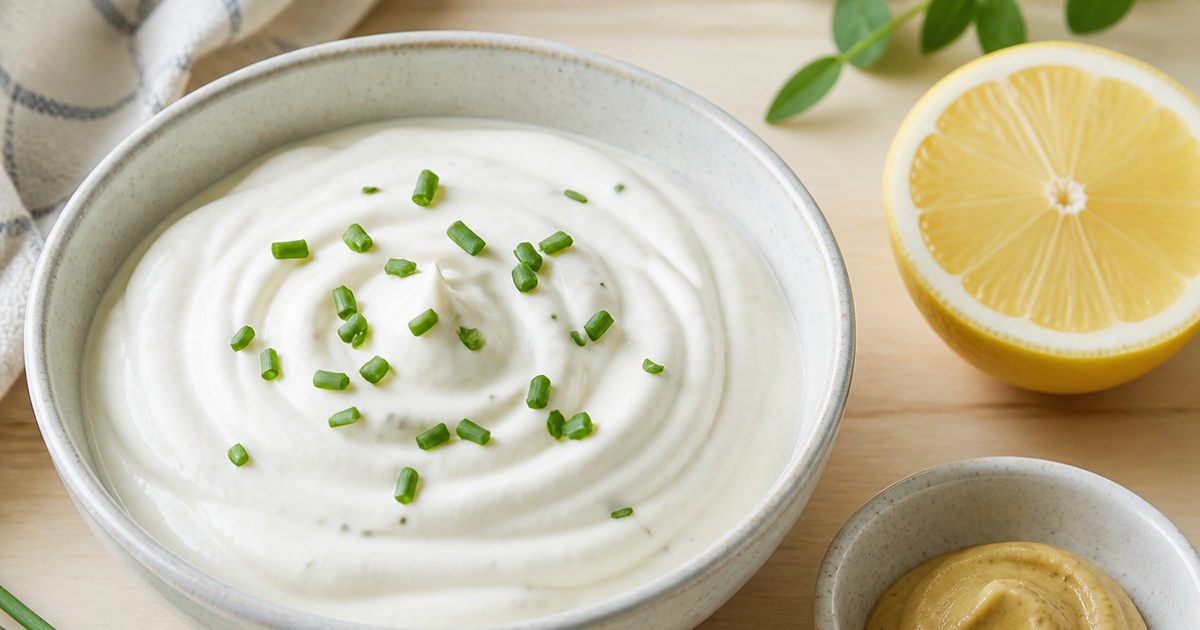
Some days you just want a cold, creamy spread for a sandwich without opening a jar of regular mayo. This fat-free mayonnaise recipe solves that in a few minutes. It uses plain reduced-fat Greek yogurt, Dijon mustard, lemon juice or white wine vinegar, and a few basic seasonings to make a tangy, spoonable mayo substitute that works well for wraps, sandwiches, and dips.
It is not an exact copy of classic mayonnaise. There is no oil-and-egg emulsion here. Instead, you get a chilled, creamy condiment with a clean tang and a thicker texture after a short rest in the fridge. If you have been looking for a simple fat-free mayonnaise recipe for cold lunches and quick snacks, this one is easy to keep in rotation.
Quick details for this fat-free mayonnaise recipe
- Prep time: 5 minutes
- Chill time: 15 to 30 minutes
- Total time: 20 to 35 minutes
- Yield: 1 cup (240 mL)
- Servings: 16 servings, 1 tablespoon each
Allergen note: This version contains dairy from Greek yogurt.
Soy note: If you use the tofu variation below, it contains soy.
Food safety: Keep this spread refrigerated. Since it is dairy-based, do not leave it at room temperature for more than 2 hours.
Ingredients for fat-free mayonnaise
- 1 cup (240 g) plain reduced-fat Greek yogurt
- 2 teaspoons (10 mL) Dijon mustard
- 1 tablespoon (15 mL) lemon juice or white wine vinegar
- 1/4 teaspoon garlic powder
- 1/2 teaspoon onion powder
- Salt, to taste
- White pepper, to taste
How to make fat-free mayonnaise
- Add the Greek yogurt, Dijon mustard, lemon juice or white wine vinegar, garlic powder, onion powder, salt, and white pepper to a small bowl.
- Whisk until the mixture looks smooth and even, with no streaks of mustard or clumps of seasoning.
- Cover the bowl or transfer the mixture to a container with a lid.
- Refrigerate for 15 to 30 minutes before serving.
That short chill makes a difference. Right after mixing, the spread tastes good, but the texture is looser. After resting in the fridge, it thickens slightly and spreads more neatly.
Why this fat-free mayonnaise recipe works
Greek yogurt does most of the heavy lifting here. It gives the spread body and a creamy feel without oil. Dijon adds sharpness and helps round out the yogurt’s tang. Lemon juice or white wine vinegar brightens the flavor, while garlic and onion powder fill in the savory notes people expect from a mayo-style spread.
Whisking matters more than it might seem. If you stir lazily, the seasoning can sit unevenly in the yogurt and the texture can feel patchy. A full minute of whisking gives you a smoother result.
The fridge time helps too. Cold yogurt firms up a bit, so the mixture feels thicker and more settled after chilling. That is what makes this fat-free mayonnaise recipe especially useful for sandwiches and wraps.
What fat-free mayonnaise tastes like
This spread is creamy and tangy, with a light savory finish from the mustard and seasonings. Compared with regular mayonnaise, it tastes brighter and less rich. The texture is also different. It is a little more gel-like and less silky than full-fat mayo.
That is not a problem if you use it in the right places. This fat-free mayonnaise recipe shines in cold uses where a fresh, cool tang helps the rest of the food. Spread it on turkey sandwiches, spoon it into tuna salad, or use it as a base for a quick vegetable dip.
If you want a healthy mayo substitute for lunch prep, this is a practical option. Just expect it to behave like a yogurt-based spread, not a jarred mayonnaise copy.
Tips for the best texture
Start with thick Greek yogurt. If the yogurt is thin, the finished spread will be looser too.
Use a small bowl rather than a wide one. A smaller bowl helps the whisk move through the mixture more efficiently, which makes it easier to smooth out the seasonings.
Season lightly at first. Yogurt already has a tangy edge, so too much salt or pepper can take over fast. Taste after chilling and adjust if needed.
Keep this as a cold condiment. Heat can make yogurt separate and turn watery, so this is not the right choice for baking, frying, or stirring into hot pasta.
Easy variations on fat-free mayonnaise
This base is plain on purpose. You can change it without much effort.
Herbed fat-free mayonnaise
Whisk in 1 to 2 teaspoons dried herbs, or 2 to 3 tablespoons chopped fresh herbs such as dill, chives, or parsley. This version works well as a sandwich spread or dip for raw vegetables.
Spicy fat-free mayonnaise
Add a little hot sauce or a pinch of red pepper flakes. The heat plays nicely against the cool yogurt base.
Caesar-style version
Stir in a dash of Worcestershire sauce and 2 to 4 tablespoons Parmesan cheese. This makes the mixture taste more like a creamy dressing than a plain spread.
Allergen note: Parmesan adds dairy. Worcestershire sauce may contain fish in some brands.
Substitutions for this mayo substitute
A few swaps work well here.
- Lemon juice or white wine vinegar: Use whichever you have. Lemon tastes fresher. Vinegar gives a slightly sharper tang.
- Garlic paste instead of garlic powder: This gives a stronger garlic flavor, though the texture may be a little looser.
- Silken tofu instead of yogurt: This gives you a vegan, dairy-free option. The flavor and texture will change, but it can still work as a spread.
If you need a mayo substitute for sandwiches, the yogurt version usually gives the best balance of tang and thickness. The tofu version is useful when you need a dairy-free spread.
How to use fat-free mayonnaise
This is one of those fridge staples that earns its place because it is flexible. Use it anywhere you want a cool, creamy layer.
Try it:
– on sandwiches and wraps
– in chicken salad or tuna salad
– as a dip base for raw vegetables
– spooned onto burgers after cooking
– mixed with herbs for a quick sauce
– spread inside pita or flatbread
Because this fat-free mayonnaise recipe does not hold up well to heat, add it after the hot food is cooked. If you are making burgers or roasted vegetables, use it as a finishing condiment instead of cooking with it.
If you are serving it with meat, follow normal food-safety rules for the meat itself. Cook poultry to 165°F (74°C), ground meats to 160°F (71°C), and keep the mayo spread separate from raw meat and its juices.
How to store fat-free mayonnaise
Transfer the mixture to an airtight container and refrigerate it.
- Storage: Keep in the refrigerator for up to 2 weeks.
- Do not freeze: Freezing changes the texture and can make it grainy or watery after thawing.
- Do not reheat: This spread is meant for cold use. Heat can cause separation.
If the mixture smells off, looks watery in an unusual way, or has been left out too long, discard it.
FAQ about fat-free mayonnaise
Is this fat-free mayonnaise recipe the same as regular mayonnaise?
No. Regular mayonnaise is an emulsion made with oil and egg. This version uses Greek yogurt, so the flavor is tangier and the texture is less rich.
Can I use fat-free mayonnaise in hot dishes?
It is best not to. Heat can make the yogurt base separate and turn watery. Use it for cold spreads, dips, and finishing sauces.
What is the best use for this mayo substitute?
It works best on sandwiches, wraps, and as a dip base. It is especially handy when you want a creamy layer without using standard mayo.
Can I make this fat-free mayonnaise recipe dairy-free?
Yes. You can use silken tofu instead of Greek yogurt. That version contains soy, and it will taste a little different.
How long does homemade fat-free mayonnaise last?
Stored in an airtight container in the refrigerator, it keeps for up to 2 weeks.