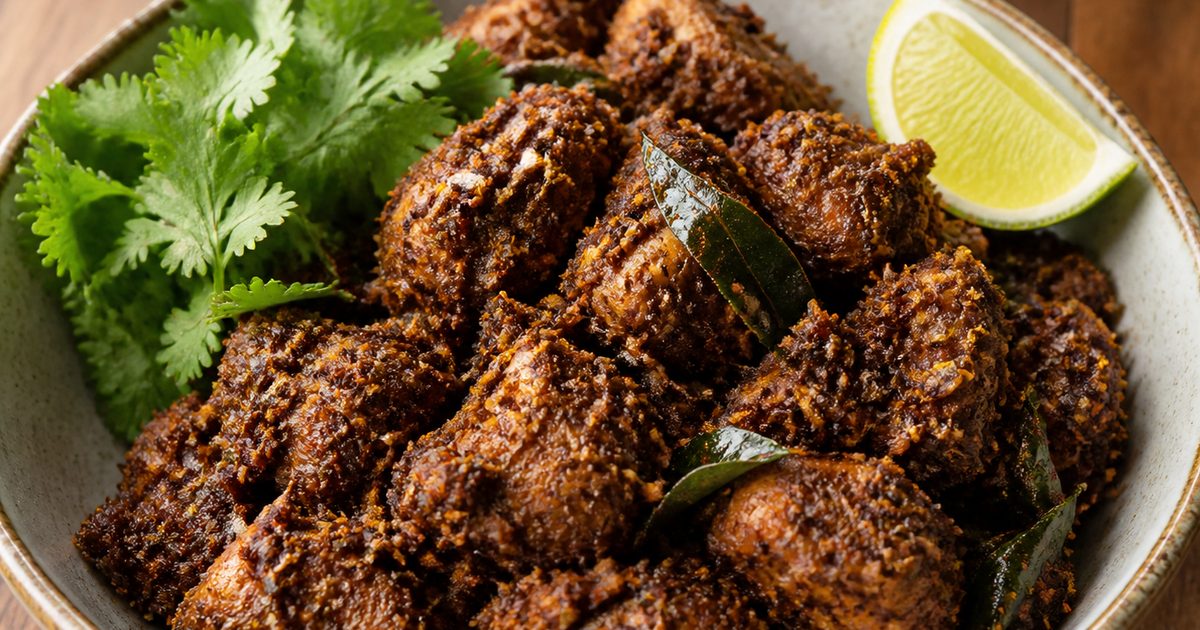
The best Kori Sukka hits the pan in layers. First come the roasted spices, then the sweet smell of onions and curry leaves, and finally the nutty aroma of coconut turning golden. By the time it is done, the chicken is coated in a thick, dry masala that clings to every piece.
This Kori Sukka recipe is a classic Mangalorean chicken preparation with a dry finish, not a gravy. If you enjoy Mangalorean chicken sukka, chicken sukka, or Kori Ajadina, this is the texture to aim for: tender chicken, concentrated spice, and just enough oil separating at the edges to show the masala has cooked properly.
Quick details for Kori Sukka
Prep time: 25 minutes
Cook time: 30-45 minutes
Total time: 55-70 minutes
Yield: 4-5 servings
What makes Kori Sukka different
Unlike a curry with lots of sauce, Kori Sukka cooks down until the masala turns thick and almost dry. The flavor comes from two key steps.
First, you dry roast the whole spices. That wakes up their oils and gives the dish its deep, warm base. Then you roast the coconut until golden brown. That adds nuttiness and helps create the signature dry texture.
Rush either step and the dish loses its edge. Burnt fenugreek tastes bitter. Pale coconut tastes flat. Slow roasting makes the difference here.
Ingredients for Kori Sukka
For 4-5 servings:
- 2.2 lb (1 kg) chicken, curry cut, bone-in or boneless
- 4-6 tbsp ghee or coconut oil
- 2 medium onions, finely chopped or sliced, about 1 cup or 150 g
- 1.5 tbsp ginger-garlic paste, or 1 inch ginger and 10-12 cloves garlic
- 15-20 curry leaves
- 1 cup fresh grated coconut, about 100 g, or dry desiccated coconut
- 1-2 tbsp tamarind paste, or a marble-sized ball of tamarind soaked in water
- Salt to taste
- 1/4 cup (60 ml) water, for grinding masala, plus a little more only if needed during cooking
- 1 tbsp chopped fresh coriander leaves, for garnish
For the dry roasted masala
- 10-15 dry red chilies
- 2 tbsp coriander seeds
- 1 tsp cumin seeds
- 1/2 tsp fenugreek seeds
- 1 tsp black peppercorns
- 1 inch cinnamon stick
- 3-4 cloves
- 1 tsp fennel seeds
- 1/2 tsp poppy seeds
- 1/2 tsp turmeric powder
Optional marinade
- 1/2 tsp turmeric powder
- 1 tsp salt
- 1 tbsp lime juice, if using
How to make Kori Sukka
Marinate the chicken
If you want a head start on seasoning, mix the chicken with 1/2 teaspoon turmeric, 1 teaspoon salt, and 1 tablespoon lime juice. Let it sit for 15-20 minutes at room temperature, or refrigerate it for 30 minutes to 4 hours.
If you refrigerate the chicken, keep it covered and return it to the fridge until you are ready to cook. Do not leave raw chicken out for long periods.
Roast the spices
Set a dry pan over medium-low heat. Add the dry red chilies, coriander seeds, cumin seeds, fenugreek seeds, black peppercorns, cinnamon, cloves, fennel seeds, and poppy seeds.
Roast for 3-5 minutes, stirring often, until the spices smell fragrant and look lightly browned. Do not let them darken too much.
Tip the spices onto a plate and cool them completely. If you grind them while hot, steam can make the masala pasty.
Grind the masala
Add the cooled roasted spices to a blender with the turmeric powder and tamarind paste, or the soaked tamarind. Grind to a fine powder or smooth paste. Add up to 1/4 cup (60 ml) water only if the blender needs help moving.
Set the masala aside. It should smell sharp, warm, and slightly tangy.
Roast the coconut
Use the same pan and keep the heat low. Add the grated coconut and stir continuously for 5-7 minutes, until it turns golden brown and smells nutty.
Stay close for this part. Coconut burns fast, especially near the end.
Cook the onion base
Heat 2-3 tablespoons ghee or coconut oil in a large pan or kadai over medium heat. Add the onions and cook for 5-7 minutes, stirring now and then, until they soften and turn lightly golden.
Add the ginger-garlic paste and curry leaves. Cook for 1-2 minutes, just until the raw smell fades.
Fry the chicken
Add the chicken pieces and turn the heat up slightly. Cook for 3-4 minutes, stirring to coat the meat in the onion mixture, until the outside changes color.
This short fry helps the chicken firm up before it simmers in the masala.
Add the masala and simmer
Lower the heat to medium. Add the ground masala and salt as needed. Mix well so the paste coats the chicken evenly.
Cover the pan and cook for 15-20 minutes, stirring occasionally. The chicken will release moisture as it cooks. If the pan looks too dry before the chicken is nearly done, add a small splash of water, up to 1/4 cup (60 ml).
You are not building a sauce here. Keep the mixture thick.
Finish with roasted coconut
Stir in the roasted coconut and cook uncovered over low heat for 5-10 minutes. Stir often and keep scraping the bottom of the pan so the masala does not catch.
The dish is ready when the masala looks dry and clingy, and a little oil starts to show at the sides.
Finish with chopped coriander leaves and serve hot.
How to tell when Kori Sukka is done
Three signs matter:
- The chicken is cooked through and tender
- The masala coats the pieces instead of running like gravy
- Oil begins to separate lightly at the edges of the pan
For food safety, chicken should reach an internal temperature of 165°F (74°C) at the thickest part. If you are using bone-in pieces, check near the bone to make sure they are fully cooked.
Tips for the best Kori Sukka
Keep the heat low to medium-low while roasting spices and coconut. That gives you control and helps prevent bitterness.
Use a mix of chilies if you like. Byadgi chilies bring color, while Guntur chilies add more heat. Kashmiri chilies are another good option for a milder, red masala.
Fresh grated coconut gives the fullest flavor, but desiccated coconut works when that is what you have. Roast it carefully and stop once it turns golden.
Ghee gives richness. Coconut oil gives a more traditional coastal flavor. A neutral oil works too, though the final taste will be a little different.
If you want a shortcut, you can use Mangalorean bafat powder in place of the whole roasted spices. The dish will still be good, but the flavor will not be quite the same as freshly roasted masala.
Variations on Kori Sukka
This style works well with other proteins and vegetables.
- Prawns: Cook much faster, so add them later and simmer only until just done.
- Mutton: Needs a longer cooking time than chicken.
- Paneer or mushrooms: Good vegetarian options with the same masala. Try our Mushroom Medley for a similar flavor profile.
- Jackfruit: Works well if you want a plant-based version with more bite.
For a semi-dry version, add a little more water during the final stage and stop cooking before the masala dries out fully.
What to serve with Kori Sukka
This dry chicken dish pairs well with simple sides that balance the strong masala. Try it with:
- neer dosa
- roti
- chapati
- steamed rice
- a simple dal on the side
It also works as part of a larger Mangalorean meal.
Storage and reheating
Cool leftovers and refrigerate them in an airtight container within 2 hours of cooking. Store in the fridge for 2-3 days.
Reheat on the stovetop over low heat, or use the microwave in short bursts. If the masala has tightened too much in the fridge, add a small spoonful of water before reheating.
You can freeze Kori Sukka for up to 1 month in a freezer-safe container. Thaw it in the refrigerator before reheating.
The masala paste can be made ahead and refrigerated for up to 2 days, or frozen for longer storage.
Allergen and ingredient notes for Kori Sukka
This dish contains:
- Coconut
- Dairy, if you use ghee
It is naturally free of eggs, soy, and gluten based on the ingredients listed here, but always check packaged ingredients such as tamarind paste or spice blends if you are cooking for someone with allergies.
When handling raw chicken, wash your hands, knife, board, and any bowls that touched it before moving on to other ingredients.
Kori Sukka FAQ
What is Kori Sukka made of?
Kori Sukka is made with chicken, roasted whole spices, coconut, tamarind, onions, ginger, garlic, and curry leaves. The finished dish is dry or semi-dry, with masala coating the chicken.
What does sukka mean?
In this context, “sukka” refers to a dry style of preparation. That is why the masala cooks down until it clings to the meat instead of staying saucy.
Can I make Kori Sukka ahead of time?
Yes. In fact, the flavor settles in nicely after a few hours. You can cook it ahead and reheat gently before serving, or make the masala paste in advance.
Can I use boneless chicken?
Yes. Boneless chicken works in this recipe. Bone-in pieces often give a little more flavor, but either option is fine as long as you cook the chicken to 165°F (74°C). For a different chicken dish, try our Jidori chicken breast, which focuses on crispy skin and juicy meat.
How do I keep the spices and coconut from burning?
Use low or medium-low heat and stir often. Pull the spices once they smell fragrant and look lightly browned. Stop roasting the coconut as soon as it turns golden and nutty.