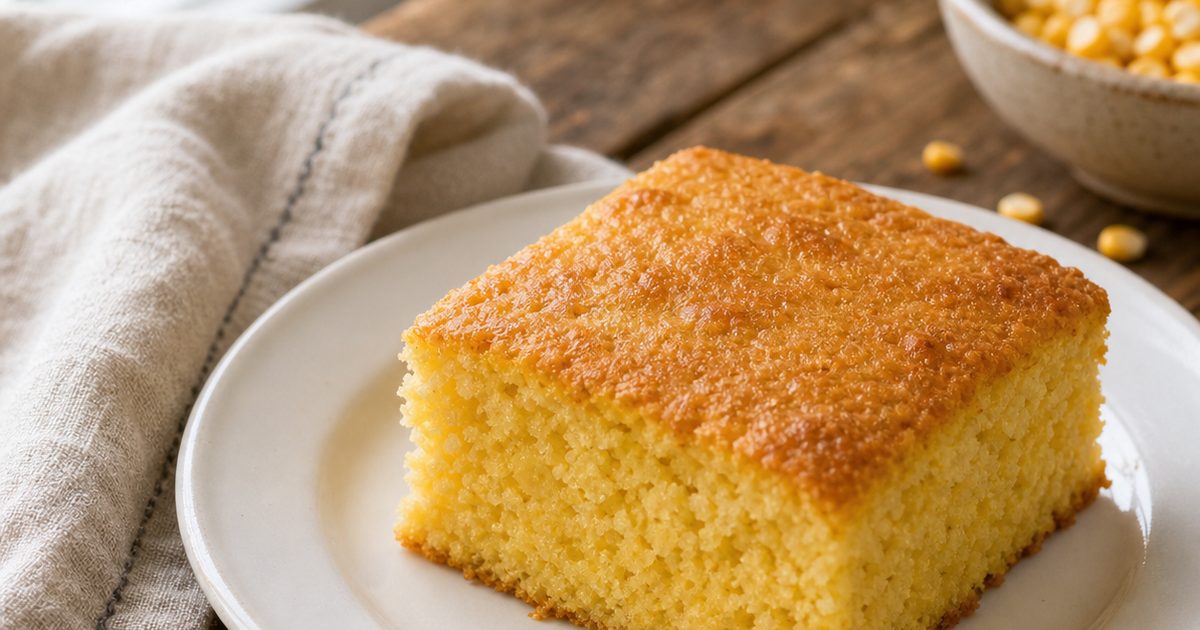
A warm pan on the table, a pot of chili nearby, and suddenly dinner feels finished. That is exactly where this low sodium cornbread fits in. It bakes up with a golden top, a soft center, and the classic cornmeal flavor you want, without added salt. If you have been looking for a homemade cornbread recipe that keeps sodium in check, this one is simple, reliable, and easy to pair with soups, beans, or roasted vegetables.
This low sodium cornbread uses low-sodium baking powder and unsalted butter, and it skips added salt altogether. The key step is simple: stir the batter only until the dry spots disappear. That small detail keeps the crumb tender instead of heavy.
Why this low sodium cornbread works
A lot of cornbread recipes build flavor with salt, salted butter, and regular baking powder. This low sodium cornbread takes a different route. It leans on cornmeal, a little sugar, butter, and careful mixing for flavor and texture.
The ingredient list is short, and each part has a clear job:
- All-purpose flour gives the bread structure.
- Yellow cornmeal brings the classic taste and slightly textured crumb. Medium-grain cornmeal works especially well here.
- Granulated sugar adds light sweetness. You can keep it as written or adjust it to suit your taste.
- Low-sodium baking powder helps the batter rise while keeping sodium lower than standard versions.
- Milk adds moisture. Dairy milk or almond milk both work.
- Eggs help bind the batter and support the rise.
- Vegetable oil and melted unsalted butter keep the crumb soft and moist.
If you enjoy sweet cornbread, this recipe lands in the middle. It is not cake-like, but it is not strictly savory either.
Ingredients for low sodium cornbread
This recipe makes 9 to 12 squares, depending on how you cut the pan.
- 1 1/2 cups (190 g) all-purpose flour
- 1 cup (160 g) yellow cornmeal, preferably medium-grain
- 1/4 cup (50 g) granulated sugar, or adjust to taste
- 2 teaspoons (10 g) low-sodium baking powder
- 1 cup (240 ml) milk, low-fat dairy milk or almond milk
- 2 large eggs, beaten
- 1/4 cup (60 ml) vegetable oil, or light olive oil
- 1/4 cup (57 g) unsalted butter, melted
Prep time: 10 to 15 minutes
Bake time: 25 to 30 minutes
Total time: 35 to 45 minutes
How to make low sodium cornbread
-
Heat the oven. Preheat to 400°F (200°C).
-
Prepare the pan. Lightly grease an 8×8-inch (20×20 cm) or 9×9-inch (23×23 cm) square baking pan with butter or cooking spray.
-
Mix the dry ingredients. In a large bowl, whisk together the flour, cornmeal, sugar, and low-sodium baking powder.
-
Mix the wet ingredients. In a separate bowl, whisk the milk, beaten eggs, oil, and melted butter until smooth.
-
Combine gently. Pour the wet mixture into the dry ingredients. Stir with a spoon or spatula just until combined. A few lumps are fine.
-
Transfer to the pan. Spread the batter evenly in the prepared pan.
-
Bake. Bake for 25 to 30 minutes, until the top is golden and a toothpick inserted in the center comes out clean.
-
Cool briefly. Let the cornbread rest for a few minutes before slicing and serving.
If you want clean squares, let it cool a bit longer. If you want it warm and soft with dinner, cut in sooner and serve straight from the pan.
The mixing tip that keeps low sodium cornbread tender
This is the step that matters most. Once the wet ingredients hit the dry ingredients, mix gently and stop as soon as the batter comes together.
Overmixing develops the gluten in the flour. That makes cornbread tougher and less tender. You do not need a perfectly smooth batter here. In fact, a slightly lumpy batter is better.
Baking time matters too. Pull the pan when the top turns golden and the center tests done. If you leave it in too long, the edges dry out first, then the middle follows.
Flavor and texture notes
This low sodium cornbread has a soft crumb with enough structure to slice neatly. The cornmeal gives it that familiar grainy bite, but it stays tender because of the milk, eggs, oil, and butter.
The sugar level gives a lightly sweet result. That makes it flexible. It works beside savory dishes like chili and beans, but it also tastes good warm with a little butter or honey if that fits your diet.
Because this is a no added salt cornbread, the flavor is a little more delicate than some classic Southern-style versions. Serving it warm helps bring out the butter and corn flavor.
Easy variations for low sodium cornbread
This batter is easy to change without changing the basic method.
For a more savory pan, keep the sugar at 1/4 cup or reduce it slightly. You can also stir in:
- 1/2 cup (75 g) no-salt-added frozen corn kernels
- 1/4 cup (30 g) chopped green chiles
- 1 to 2 minced jalapeños
For a sweeter version, you can increase the sugar to 1/2 cup (100 g), or add 1/4 cup (85 g) honey.
For a dairy-free version, use almond milk in place of dairy milk.
These add-ins work best when folded in at the end, after the batter is almost mixed. That helps prevent overmixing.
Substitutions that work
A few swaps fit naturally into this recipe and still give good results.
- Whole wheat flour: Replace up to half of the all-purpose flour. The bread will be a little denser.
- Buttermilk-style substitute: Stir 1 to 2 tablespoons (15 to 30 ml) white vinegar into 1 cup (240 ml) milk. Let it sit for 5 minutes, then use it in place of the milk.
- Gluten-free option: Use a 1-to-1 gluten-free flour blend instead of all-purpose flour.
If you use a gluten-free blend, check that your cornmeal and baking powder are also labeled gluten-free if needed.
Allergens and food-safety notes
This recipe contains:
– Gluten from all-purpose flour
– Eggs
– Dairy if using milk and butter
– Tree nuts if using almond milk, depending on the brand
If you need to avoid dairy, use almond milk instead of dairy milk. If you need to avoid gluten, use a 1-to-1 gluten-free flour blend.
For food safety, use clean bowls and utensils when handling raw eggs. Bake the cornbread until the center is fully set and a toothpick comes out clean. If you want to check with a thermometer, the center should reach at least 160°F (71°C) because the batter contains eggs.
How to serve low sodium cornbread
This low sodium cornbread is at home next to hearty, simple meals. Try it with:
- Chili
- Bean soup
- Lentils
- Stewed greens
- Roasted vegetables
- Barbecue-style mains
- A bowl of vegetable soup
It is also good for breakfast the next day, warmed and served plain or with a little jam.
Storing and reheating low sodium cornbread
Let the cornbread cool completely before storing it.
- At room temperature: Store in an airtight container for 1 to 3 days.
- In the refrigerator: Store for up to 5 to 7 days.
- In the freezer: Wrap tightly in foil, then place in a freezer-safe bag or container. Freeze for 3 to 6 months.
To reheat, warm individual squares in the microwave in short bursts, or cover the pan or pieces with foil and heat in a low oven until warmed through. If the cornbread seems a little dry after storage, a small pat of butter or a light brush of oil helps bring back some softness.
Low sodium cornbread FAQ
Why make low sodium cornbread?
Traditional versions often get a lot of sodium from added salt, salted butter, regular baking powder, and buttermilk. This version keeps the familiar texture and flavor while using lower-sodium choices.
What makes this cornbread lower in sodium?
It skips added salt, uses unsalted butter, and relies on low-sodium baking powder. Those changes lower the sodium without changing the method.
Can I use a different flour?
Yes. You can replace up to half of the all-purpose flour with whole wheat flour. You can also use a 1-to-1 gluten-free flour blend if needed.
How do I keep cornbread moist?
Do not overmix the batter, and do not overbake the pan. Bake just until the center tests clean and the top turns golden.
Can I add corn, chiles, or jalapeños?
Yes. No-salt-added corn, chopped green chiles, and minced jalapeños all work well in this batter and do not require other changes.