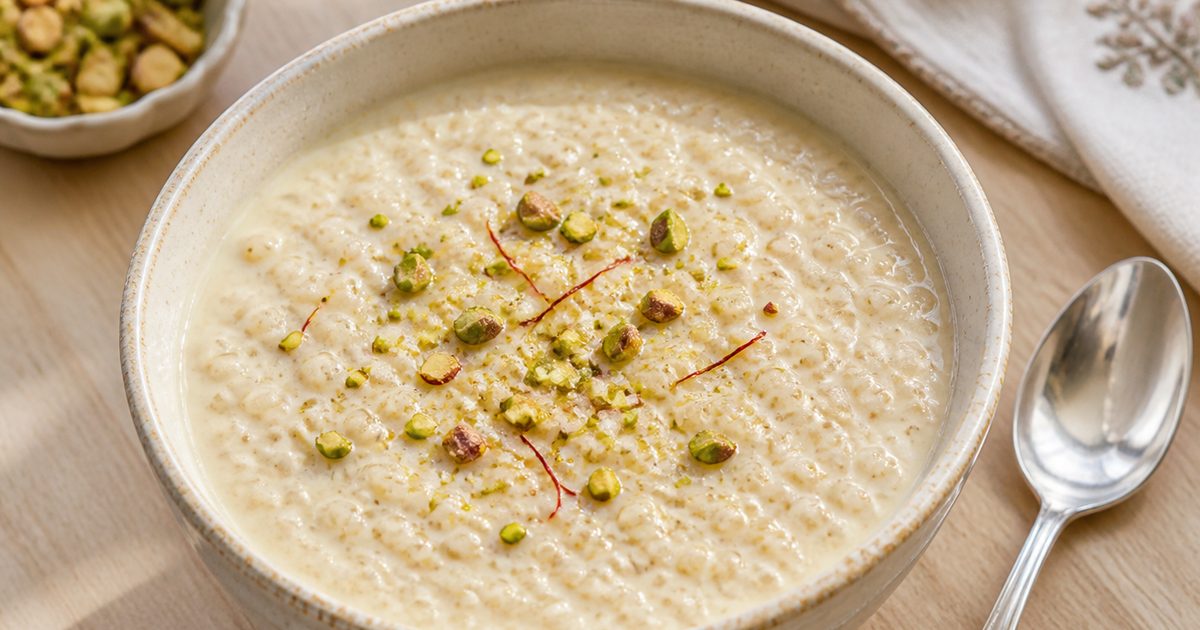
A slow pot of milk, a spoon scraping the bottom of the pan, and the smell of cardamom in the kitchen. That is usually how Moriyo Kheer begins. This simple Indian milk pudding uses barnyard millet, also called samo or moriyo, and turns a short list of ingredients into something soft, creamy, and quietly special.
Moriyo Kheer is often made during Hindu fasting days, but it is just as welcome any time you want an easy dessert that does not feel heavy. The texture sits between rice kheer and pudding. The millet softens, the milk reduces, and the nuts add a little bite. Served warm, it feels comforting. Chilled, Moriyo Kheer becomes thicker and more spoonable.
Moriyo kheer recipe details
- Prep time: 10 to 15 minutes
- Soaking time: 15 to 30 minutes
- Cook time: 18 to 25 minutes
- Total time: 45 to 70 minutes, including soaking
- Serves: 4
Ingredients for Moriyo kheer
- 1/2 cup (about 90 g) barnyard millet, also called samo or moriyo
- 3 cups (710 ml) full-fat milk
- 1/4 cup (50 g) granulated sugar, or to taste
- 1/2 teaspoon cardamom powder
- 2 tablespoons chopped mixed nuts, such as cashews, almonds, and pistachios
- 1 tablespoon raisins, optional
- A few strands saffron, soaked in 1 tablespoon warm milk, optional
- 1 teaspoon ghee, optional, for sautéing
Allergen note: This recipe contains dairy and tree nuts. If you use almond milk, soy milk, or coconut milk for a variation, the allergen profile changes. Check labels if you are cooking for someone with allergies.
Why Moriyo kheer works so well
Barnyard millet cooks faster than many other grains, which makes it a good fit for kheer. It softens without turning gluey, and it gives the pudding a gentle nutty taste. If you have tried samo kheer before, you will recognize that lighter texture right away.
Full-fat milk gives the pudding body. Since this dessert has only a few ingredients, the milk matters. A richer milk reduces better and gives you that creamy finish people expect from barnyard millet pudding. For a homemade alternative, consider trying raw milk yogurt to add a unique tang to your dessert.
Cardamom keeps the flavor warm and familiar. Saffron, if you use it, adds color and a light floral note. Nuts and raisins are small additions, but they make each spoonful more interesting.
The optional ghee is useful for one reason: it toasts the nuts quickly and brings out more flavor before they go into the pot.
How to make Moriyo kheer
-
Rinse and soak the millet.
Wash the barnyard millet well under running water. Soak it in water for 15 to 30 minutes, then drain. -
Toast the nuts if you like.
Heat 1 teaspoon ghee in a heavy-bottomed pan over medium-low heat. Add the chopped nuts and cook for 1 to 2 minutes, until lightly golden. Remove them and set aside. -
Simmer the milk.
Pour the milk into the same pan and bring it to a gentle simmer over medium heat. Do not let it boil hard. -
Add the millet.
Stir the drained millet into the simmering milk. -
Cook until the millet softens.
Lower the heat to medium-low. Cook for 15 to 20 minutes, stirring often so the milk does not catch on the bottom of the pan. The grains should look swollen and feel tender. -
Finish the kheer.
Add the sugar, cardamom powder, saffron milk if using, toasted nuts, and raisins if using. -
Stir until thick and creamy.
Simmer for 3 to 5 minutes more. Stir constantly during this stage so the sugar dissolves and the mixture stays smooth. -
Serve warm or chill.
Take the pan off the heat. Serve the pudding warm, or cool it and refrigerate for a thicker texture.
The key step in Moriyo kheer
The most important part of Moriyo Kheer is patient stirring. Milk scorches fast, especially once the millet starts releasing starch and the pudding thickens. A heavy pan helps, but your spoon does the real work.
It also helps to wait before adding sugar. Add it only after the millet is almost cooked. That keeps the texture smooth and gives the grains time to soften properly first.
How to know when Moriyo kheer is done
Look for three signs:
- The millet grains are soft and plump.
- The milk has reduced and looks creamy.
- The kheer falls from a spoon in a thick ribbon.
Do not wait for it to become overly stiff in the pot. Like most kheer recipes, this dessert thickens as it cools. If you plan to chill it, stop cooking when it still looks a little looser than you want.
Tips for the best Moriyo kheer texture
Use a gentle simmer, not a rolling boil. High heat can scorch the milk and cook the millet unevenly.
Choose a thick-bottomed saucepan if you have one. Thin pans make milk puddings harder to control.
Stir more often as the mixture thickens. In the last few minutes, stir almost constantly.
If the pudding gets too thick after chilling, loosen it with a splash of milk before serving or reheating.
If you want a smoother finish, chop the nuts finely. If you like more contrast, leave them a little chunkier.
Variations for Moriyo kheer
This recipe is flexible, but the changes should stay simple.
Use jaggery or coconut sugar:
You can swap the granulated sugar for jaggery powder or coconut sugar. The flavor will be deeper and a little more caramel-like. If you use jaggery, let the kheer cool slightly before stirring it in. That can help prevent curdling in milk-based desserts.
Make it vegan:
Use almond milk, soy milk, or coconut milk instead of dairy milk. The pudding will taste different depending on the milk you choose. Soy milk gives a fairly neutral result, coconut milk makes it richer, and almond milk adds a nuttier flavor.
Add fruit for serving:
If you are serving the pudding chilled, a little chopped fruit on top can work well. Add it at serving time, not during cooking.
Serving Moriyo kheer
Warm Moriyo Kheer feels soft and comforting, especially right after cooking. Chilled, it becomes thicker and more like a classic pudding. Both are good, so this comes down to mood and occasion.
For a simple finish, spoon it into small bowls and top with a few extra nuts. If you used saffron, let the kheer sit for a few minutes before serving so the flavor spreads through the milk.
This is also a nice answer if you are looking for a gluten-free Indian dessert. Barnyard millet is naturally gluten-free, though you should still check packaged ingredients for cross-contact if that matters in your kitchen.
Storage and reheating
Let leftovers cool, then transfer them to an airtight container and refrigerate within 2 hours.
- Refrigerator: up to 3 days
- Freezer: not recommended
To reheat, place the pudding in a small pan over low heat. Add a splash of milk and stir until smooth and warmed through. If you only want to take off the chill, you can also let it sit at room temperature briefly before serving, as long as it is not left out for more than 2 hours total.
Food safety notes for Moriyo kheer
This recipe does not contain meat or eggs, so there is no internal temperature target to check. The main food-safety concern is the milk.
- Keep milk refrigerated until you need it.
- Do not leave the cooked pudding at room temperature for more than 2 hours.
- Reheat only the portion you plan to eat if possible.
- If the pudding smells sour or looks separated after storage, discard it.
FAQ about Moriyo kheer
What is Moriyo in Moriyo Kheer?
Moriyo is barnyard millet, a small gluten-free grain-like seed often used in fasting recipes. It is also called samo in many kitchens, which is why you may see this dessert called samo kheer.
Is Moriyo Kheer gluten-free?
Yes, Moriyo Kheer is naturally gluten-free because barnyard millet does not contain gluten. If you need strict gluten-free cooking, check the packaging on the millet, cardamom, and nuts for any cross-contact warnings.
Can I make Moriyo Kheer ahead of time?
Yes. This pudding keeps well in the refrigerator for up to 3 days. It thickens as it chills, so stir in a little milk before serving if you want a looser texture.
Can I use jaggery instead of sugar in Moriyo Kheer?
Yes. Jaggery powder works well here. For the smoothest result, let the pudding cool slightly before adding jaggery, then stir until it dissolves.
What does Moriyo Kheer taste like?
It tastes creamy, lightly sweet, and gently spiced with cardamom. The millet gives it a soft texture with a mild nutty note, somewhere between rice pudding and traditional kheer.