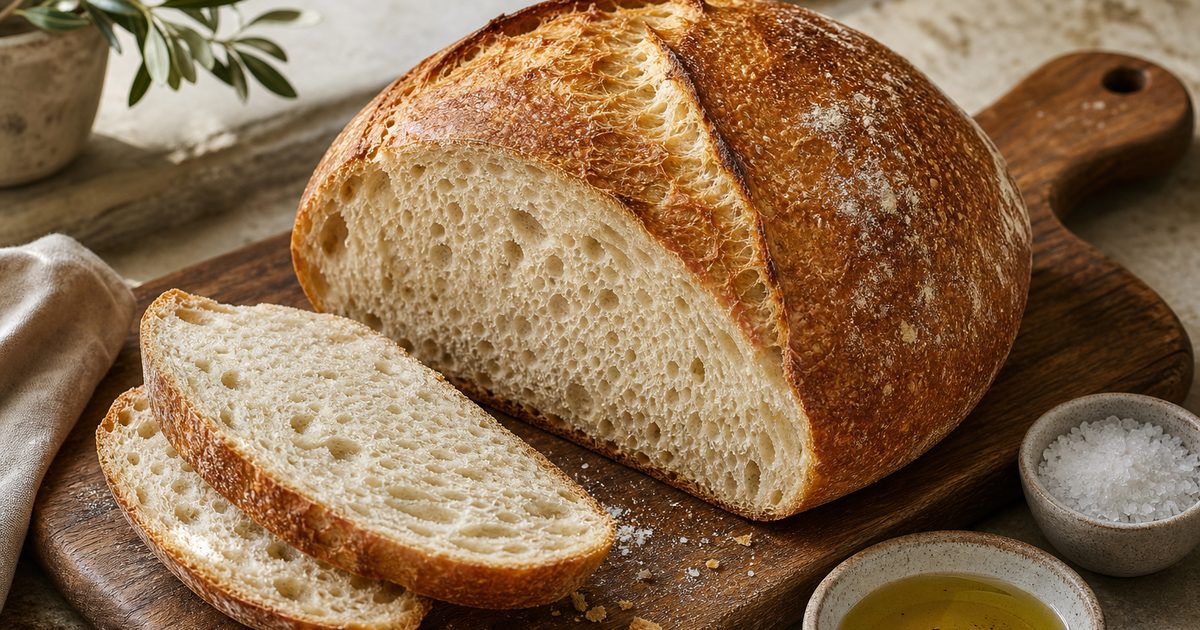
Few things beat the smell of bread in the oven, especially when it is a simple Nonna bread recipe made with pantry staples. This rustic loaf, sometimes called Italian homemade crusty bread, bakes up with a golden crust, a tender center, and the kind of plain, honest flavor that works with soup, pasta, olive oil, or just a swipe of butter.
What makes this Nonna bread recipe so appealing is how little it asks of you. Flour, water, yeast, salt, olive oil, and a bit of sugar do the job. The dough needs proper kneading and enough time to rise, but the steps are straightforward and easy to follow, even if this is your first traditional Italian loaf at home.
This recipe makes 1 large loaf or 2 medium loaves.
- Prep time: 20 to 25 minutes
- Rise time: 2 to 3 hours
- Bake time: 25 to 30 minutes
- Total time: about 2 1/2 to 3 1/2 hours
Allergen note: this bread contains gluten.
Food-safety note: because this dough is made with flour, avoid tasting raw dough before baking.
Ingredients for Nonna bread recipe
Here is everything you need for this Nonna bread recipe:
- 4 cups (500 g) all-purpose flour or bread flour, plus extra for kneading
- 1 1/2 cups (375 ml) warm water, 105 to 115°F (40 to 46°C)
- 1 packet active dry yeast, 2 1/4 teaspoons (7 g)
- 1 1/2 teaspoons salt
- 1 tablespoon (15 ml) olive oil
- 1 teaspoon sugar
Bread flour gives you a slightly chewier crumb. All-purpose flour makes a softer loaf. Either one works well in this Italian bread recipe.
How to make Nonna bread recipe
Activate the yeast
Pour the warm water into a small bowl. Stir in the sugar and yeast. Let the mixture sit for 5 to 10 minutes, until it looks foamy on top.
If nothing happens after 10 minutes, the yeast may be old or the water may have been too hot or too cool. Start over rather than mixing a dough that will not rise.
Mix the dough
Add the flour and salt to a large mixing bowl. Stir them together. Make a well in the center, then pour in the yeast mixture and olive oil.
Use a wooden spoon or sturdy spatula to mix until a shaggy dough forms. It will look rough at this stage, and that is exactly what you want.
Knead the dough
Turn the dough out onto a lightly floured surface. Knead for 8 to 10 minutes, adding only a little extra flour if the dough sticks badly.
You are looking for a dough that feels smooth, elastic, and slightly springy. If it tears easily or stays lumpy, keep kneading for another minute or two. This step builds structure, which helps the loaf rise well and keeps the crumb from turning dense.
First rise
Lightly oil a clean bowl. Place the dough inside and turn it once so the surface gets a thin coat of oil. Cover the bowl with plastic wrap or a damp cloth.
Let the dough rise in a warm, draft-free spot for 1 1/2 to 2 hours, or until doubled in size. Time matters less than volume here. If the dough has not doubled, give it more time.
Shape the loaf
Press the dough down gently to release large air pockets. Shape it into a round or oval loaf. If you want smaller loaves, divide the dough into 2 equal pieces and shape each one.
Set the shaped dough on a baking tray lined with parchment paper.
Second rise
Cover the loaf loosely and let it rise again for 30 minutes to 1 hour. The dough should look puffed and lighter. This second rise gives the bread better volume and a softer interior.
Preheat the oven
Heat the oven to 425°F (220°C).
If you like a cracklier crust, place an oven-safe dish of water on the lower rack while the oven heats. The steam helps the loaf expand before the crust sets.
Bake
Bake the loaf for 25 to 30 minutes, until it is deep golden brown and sounds hollow when tapped on the bottom.
If you made 2 medium loaves, start checking a little earlier. Ovens vary, so color and sound are better guides than the clock alone.
Cool
Move the bread to a wire rack and let it cool completely before slicing. Warm bread is tempting, but cutting too soon can make the crumb seem gummy.
Tips for the best Nonna bread recipe
A good Nonna bread recipe depends more on technique than fancy ingredients. A few small details make a big difference.
Watch the water temperature
Yeast likes warm water, not hot water. Stay in the 105 to 115°F range. If the water feels hot to the touch, check it with a thermometer before adding the yeast.
Do not rush the kneading
Eight minutes may be enough, but dough does not always follow the clock. Keep going until the dough feels smooth and elastic. That texture tells you the gluten has developed enough to support a good rise.
Let the dough fully rise
Under-risen dough bakes into a heavier loaf. If your kitchen is cool, the dough may need longer than expected. Look for dough that has doubled in size on the first rise and looks puffy after the second.
Use steam for a crustier loaf
A small pan of water in the oven can help create the crisp crust many people want from Italian homemade crusty bread. It is a simple trick, and it works well on a regular baking tray.
Cool before slicing
This part feels slow, but it matters. The inside of the loaf keeps setting as it cools. Give it time, and the slices will be cleaner and less sticky.
Variations for Nonna bread recipe
This Nonna bread recipe is simple, which makes it easy to adjust without losing its rustic character.
Try a different flour
- Use bread flour for a chewier loaf.
- Substitute up to 50% whole wheat flour for a heartier bread. The texture will be denser, and the dough may need a little more water.
- Use “00” flour if you have it on hand for a finer-textured crumb.
Add a topping
Before baking, you can sprinkle the shaped loaf with sesame seeds or dried herbs. These additions keep the bread simple but add a little extra flavor and texture.
Swap the yeast
If you use instant yeast instead of active dry yeast, you can usually mix it straight into the flour instead of proofing it in water first. Follow the yeast package directions if they differ.
Change the fat
Olive oil gives the loaf a classic flavor. Melted shortening can replace it if that is what you use, though the texture and taste will shift slightly.
Serving ideas for Nonna bread recipe
A fresh Nonna bread recipe loaf fits into all kinds of meals. Serve thick slices with olive oil and a pinch of salt, alongside pasta, or next to a bowl of Famous Barr French Onion Soup. It also makes good toast the next day.
If you bake 2 medium loaves, keep one plain for the table and use the second for sandwiches or garlic bread.
How to store and reheat Nonna bread recipe
Once the bread has cooled completely, store it at room temperature, covered, for 2 to 3 days. A bread box or paper bag works better than sealing it tightly in plastic, which can soften the crust.
For longer storage, freeze the loaf or slices, wrapped well, then thaw at room temperature.
To refresh the crust, warm the bread in a 350°F (175°C) oven for a few minutes. If you are reheating frozen slices, toast them straight from the freezer.
FAQ about Nonna bread recipe
What is Nonna bread?
Nonna bread is a simple homemade Italian-style bread made with flour, water, yeast, salt, olive oil, and a little sugar. It is known for its crisp crust and soft crumb.
Why did my Nonna bread turn out dense?
The most common causes are not kneading the dough enough or not letting it rise long enough. Check that your yeast foamed during activation and that the dough doubled during the first rise.
Can I use whole wheat flour in this Nonna bread recipe?
Yes. Replace up to half of the white flour with whole wheat flour. The loaf will be a little denser and may need slightly more water.
Do I need a Dutch oven for Nonna bread recipe?
No. A baking tray lined with parchment works well. If you want more crust, add steam to the oven with a small dish of water on the lower rack.
What is the best water temperature for yeast?
For this Nonna bread recipe, use water between 105 and 115°F (40 to 46°C). That range helps active dry yeast bloom without damaging it.