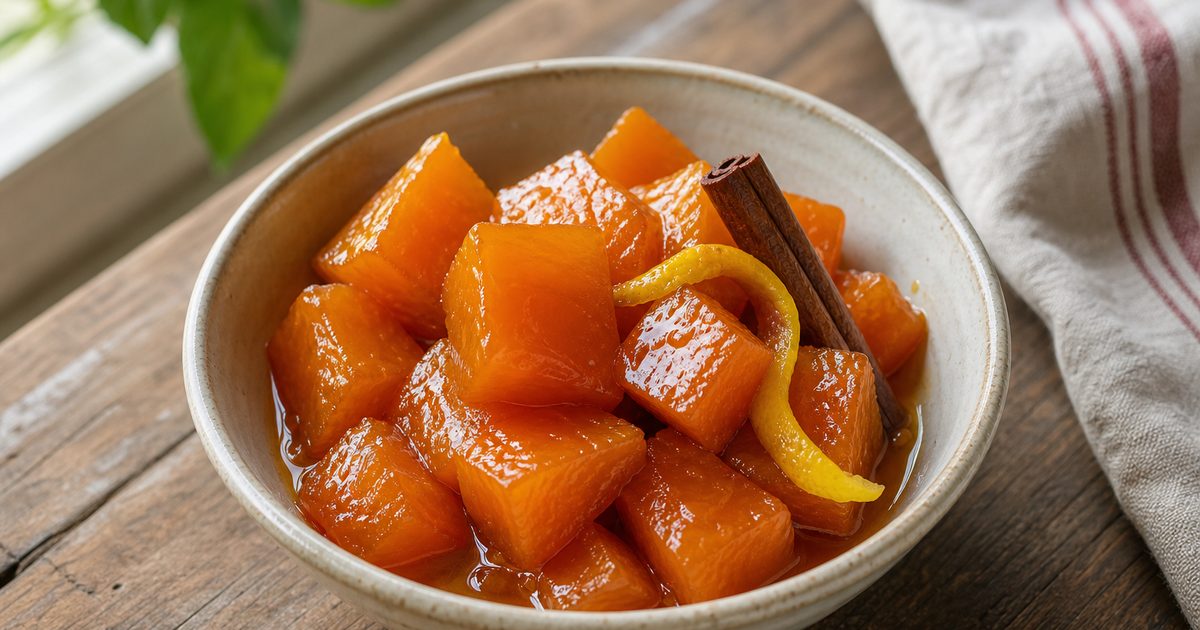
If you have ever walked into a kitchen where pumpkin is simmering with cinnamon and orange, you already know why calabaza en tacha is worth making. The syrup smells warm and sweet, and the pumpkin turns soft at the edges while still holding its shape. Calabaza en tacha is a classic Mexican candied pumpkin, often made for Día de los Muertos, but it fits just as well on a cool weeknight when you want dessert without baking a whole cake.
What I like most about calabaza en tacha is the texture. You leave the rind on, cut the pumpkin into big pieces, and let it cook slowly so the flesh absorbs the syrup instead of collapsing into mush. Piloncillo gives the syrup a deep caramel note. Cinnamon and orange keep it lively. When it is done, calabaza en tacha looks glossy and smells like fall.
Prep time is 15 to 20 minutes. Cook time is about 1 hour. Total time is 1 hour 15 minutes to 1 hour 20 minutes. This recipe makes 8 to 10 servings.
Ingredients for calabaza en tacha
For 8 to 10 servings, you need:
- 1 medium pumpkin, about 5 lb (2.3 kg)
- 2 cones piloncillo, or 1 lb (450 g) brown sugar
- 4 cups (946 ml) water
- 1 orange, zested and juiced
- 3 to 4 cinnamon sticks
- Pinch of salt
- Optional: 2 star anise
- Optional: pinch of allspice
- Optional: 3 whole cloves
This calabaza en tacha recipe is naturally free of dairy, gluten, eggs, nuts, soy, and shellfish as written. If you serve it with milk or crema, it will contain dairy.
Why these ingredients matter in calabaza en tacha
Piloncillo is the traditional sweetener for calabaza en tacha. It tastes darker and richer than brown sugar, almost like caramel with a little molasses. If you cannot find it, brown sugar is the standard substitute and still makes a good syrup.
Cinnamon sticks work better than ground cinnamon here. They flavor the syrup without making it cloudy or gritty.
Orange zest and juice balance the sweetness. Without that citrus note, the syrup can taste heavy.
The rind matters too. In calabaza en tacha, it helps the pumpkin stay in large, neat pieces during the long simmer. That is one of the dish’s signature details.
How to make calabaza en tacha
Prepare the pumpkin
Cut off the stem, then cut the pumpkin in half. Scoop out the seeds and stringy center. Leave the rind on.
Cut the pumpkin into 8 to 10 long strips, or into pieces about 1 1/2 to 2 inches (3.8 to 5 cm) wide. Try to keep the pieces close in size so they cook at the same rate.
If the rind feels especially hard, use the tip of a sharp knife to poke a few small holes in it. That helps the syrup reach the flesh more easily.
Use a stable cutting board and a sharp knife. Pumpkin is hard and can slip, so take your time.
Make the syrup
In a large pot, combine the piloncillo or brown sugar, water, orange zest, orange juice, cinnamon sticks, salt, and any optional spices you want to use.
Bring the mixture to a boil over medium-high heat. Stir now and then until the piloncillo or sugar dissolves.
Lower the heat and simmer the syrup for about 20 minutes. This step gives the cinnamon and orange time to flavor the liquid before the pumpkin goes in.
Simmer the pumpkin
Set the pumpkin pieces in the pot, rind-side down. They do not need to be fully submerged.
Cover the pot, keep the heat low, and simmer for about 1 hour. You want gentle bubbling, not a hard boil. Fast boiling can break the pumpkin apart before the center turns tender.
If your pot is wide, check once or twice during cooking and spoon some syrup over any exposed pieces.
Check for doneness
Start testing around 45 minutes. Slide a fork into the flesh. It should go in easily, but the pumpkin should still hold together when you lift a piece.
The exact time depends on the pumpkin you use and how large you cut it. Some pieces may be ready closer to 45 minutes, while thicker pieces may need the full hour.
Reduce the syrup, if you like
If you want a thicker glaze, uncover the pot during the last 20 minutes of cooking. The syrup will reduce and cling more closely to the pumpkin.
If you prefer a looser syrup for spooning into bowls, keep the pot covered and leave more liquid in the pan.
Cool in the syrup
Take the pot off the heat and let the pumpkin cool in the syrup. This last rest helps calabaza en tacha absorb more flavor and keeps the surface moist.
Serve it warm, at room temperature, or chilled.
Tips for the best calabaza en tacha texture
The heat level makes a big difference. Keep the simmer low so the pumpkin softens gradually. If the syrup boils too hard, the outside can turn mushy before the inside is ready.
Large pieces are better than small cubes. Traditional calabaza en tacha is meant to look rustic and generous, and bigger pieces are easier to cook without falling apart.
Try not to stir the pot much once the pumpkin is in. Stirring can break the softened pieces. If you need to move syrup around, spoon it over the top instead.
If you are making calabaza en tacha at home for the first time, check early rather than late. You can always cook it a little longer, but you cannot fix overcooked pumpkin.
Serving ideas for calabaza en tacha
A bowl of calabaza en tacha is good on its own, especially while it is still a little warm. The syrup settles into the pumpkin, and the cinnamon comes through first.
It is also common to serve it with milk or Mexican crema. That creamy finish softens the sweetness and makes the dessert feel a little richer. Roasted pumpkin seeds, or pepitas, add a nice crunch if you want contrast.
If you are serving guests, spoon some syrup over each piece right before it goes to the table. That small step makes calabaza en tacha look especially glossy.
Substitutions for calabaza en tacha
Piloncillo is traditional, but 1 pound (450 g) of brown sugar works when that is what you have.
You can also make calabaza en tacha with other firm winter squash. Pie pumpkin, butternut squash, and acorn squash all work well. The flavor and texture will shift a little, but the method stays the same.
If you do not have cinnamon sticks, you can use ground cinnamon, though the syrup will be less clear and the spice flavor will be stronger in a different way. Since the original ingredient list does not give a measured amount for ground cinnamon, add it carefully and expect a less traditional result.
Optional spices like star anise, cloves, and allspice can add depth, but keep them light. Cinnamon, pumpkin, and piloncillo should still lead.
Storing and reheating calabaza en tacha
Let calabaza en tacha cool before you transfer it to an airtight container. Refrigerate it for up to 2 weeks.
You can eat it cold straight from the fridge, or warm it gently on the stove or in the microwave. If you reheat it on the stove, use low heat so the syrup does not scorch and the pumpkin does not break apart.
Use a clean spoon each time you serve it to help it keep well.
Allergen and food-safety notes
This recipe does not contain meat or eggs, so there is no meat or egg temperature note needed for calabaza en tacha.
As written, the dish is free of dairy, gluten, nuts, soy, shellfish, and eggs. If you serve it with milk or crema, note the dairy for anyone at the table with allergies.
Wash the orange before zesting. Rinse the outside of the pumpkin before cutting, since the knife can carry anything on the skin into the flesh.
FAQ about calabaza en tacha
What is calabaza en tacha?
Calabaza en tacha is a traditional Mexican candied pumpkin dessert. The pumpkin cooks slowly in a syrup made with piloncillo, cinnamon, and orange until it turns tender and glossy.
What kind of pumpkin is best for calabaza en tacha?
Calabaza de Castilla is traditional, but any firm winter squash can work. Pie pumpkin, butternut squash, and acorn squash are common choices for calabaza en tacha at home.
Can I use brown sugar instead of piloncillo in calabaza en tacha?
Yes. Brown sugar is the usual substitute. The syrup will still taste good, though piloncillo gives calabaza en tacha a deeper, more caramel-like flavor.
Why do you leave the rind on for calabaza en tacha?
The rind helps the pumpkin keep its shape while it simmers. That is important in calabaza en tacha, where the pieces should be tender but still intact.
How do you serve calabaza en tacha?
Serve calabaza en tacha warm, at room temperature, or chilled. Many people add milk, crema, or a few roasted pepitas on top.